



Technological Drivers: Engineering for the AI Factory
The regulatory framework is merely a response to the technology itself. The current expansion wave is not about storing more video or hosting more websites; it is about raw, specialized computation. This distinction changes everything about facility design and power requirements.
The Central Role of Artificial Intelligence Infrastructure
The primary, undeniable engine of this expansion is the escalating global demand for computation supporting advanced Artificial Intelligence. We are moving from an era dominated by model *training*—which consumes enormous, concentrated bursts of power—to an era dominated by model *inference*. Inference is the revenue-generating application: running the models to answer queries, generate code, or power autonomous systems. These facilities are being engineered specifically to house cutting-edge Graphical Processing Units (GPUs) and custom Application-Specific Integrated Circuits (ASICs). These specialized accelerators offer performance capabilities that dwarf even traditional High-Performance Computing (HPC) clusters. The scale is not just about square footage; it’s about packing the highest possible concentration of compute power into the smallest possible footprint. The global data center sector is currently in the midst of an “infrastructure investment supercycle,” with projections that nearly 100 GW of new capacity will be added between 2026 and 2030 just to handle this demand.
Design Philosophy Centered on Next-Generation Computing Power
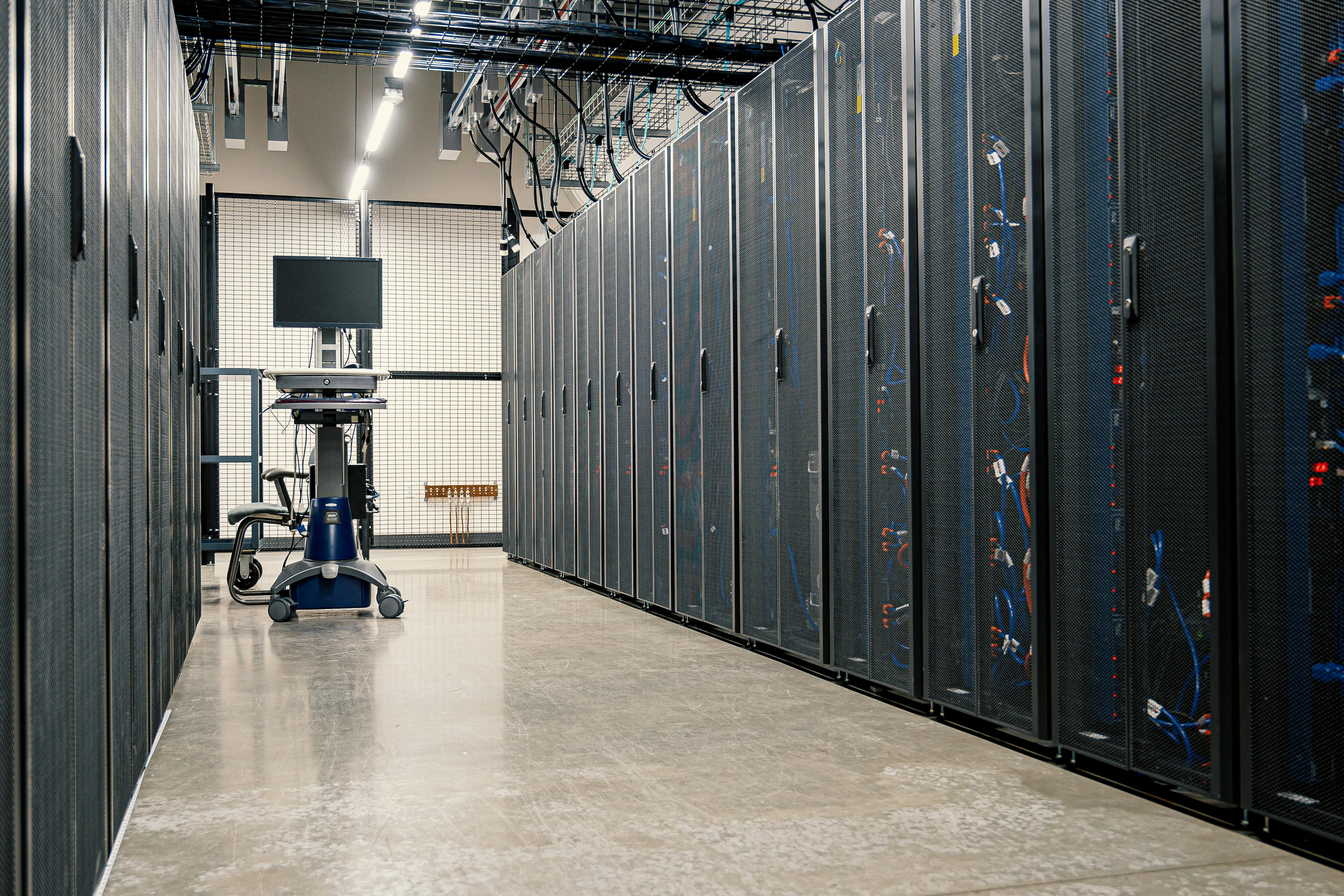
The term “data center” is becoming slightly anachronistic. These new builds are purpose-built technological engines, not generic real estate shells. They are not designed to accommodate legacy server loads; they are tailored for the extreme power density and corresponding cooling requirements of modern AI accelerators. Key design shifts that illustrate this include:
- Density: Average rack density is rapidly increasing, with predictions that new AI facilities will see racks approaching or exceeding 100 kW, compared to traditional averages of far less.. Find out more about Executive support for statewide data center regulation.
- Cooling: This density mandates a shift away from air cooling. Forecasts suggest an 80% adoption rate for **liquid cooling** in new facilities in the coming years. In the Wisconsin example, one facility is reportedly relying on a state-of-the-art closed-loop liquid cooling system for 90% of its operations, only reverting to outside air cooling in extreme weather.
- Internal Networking: The sheer volume of data transfer required between thousands of interconnected GPUs necessitates integrating specialized, high-bandwidth networking fabrics directly into the building’s core design, turning the structure itself into a giant, optimized switch.
- Perceived visual impact of the campus footprint.
- Noise considerations from continuous cooling apparatus operation.
- Strain on local public services, even if employment is high-skill and non-local.
- For Municipal Leaders: Demand Rate Structure Pre-Commitment. Do not accept simple promises about “no cost increases.” Focus negotiations on securing a pre-agreed, codified rate structure—like Wisconsin’s proposed “Very Large Customer” tariff—that legally obligates the data center to cover all grid upgrade costs, thus isolating the retail consumer. This must be settled *before* major construction permits are issued.
- For Infrastructure Investors: Factor in Permitting Time Multipliers. Assume that post-design-lock, environmental and zoning re-reviews will add 9-18 months to your timeline, particularly if you are utilizing cutting-edge, high-density cooling like advanced liquid systems. Build this contingency into your financial modeling; speed to power is now gated by speed to regulatory compliance on *revised* designs.. Find out more about Executive support for statewide data center regulation overview.
- For Advocacy Groups: Focus on Data Transparency & Replenishment. Your most powerful tool is now data. Leverage the industry-wide commitment to publishing water usage figures. Demand that replenishment plans are audited by independent third parties and are focused on local watershed improvement, not just abstract corporate offsets hundreds of miles away.
- For Workforce Developers: Leverage Academy Partnerships. The trend of building on-site technical academies is your immediate opportunity. Treat these commitments as firm anchors for your curriculum development. Lobby for the training to be vendor-neutral where possible to ensure long-term local career viability beyond a single corporation’s hardware cycle.
- Microsoft’s official articulation of its new framework: Building Community-First AI Infrastructure
- A global outlook on the market dynamics fueling this expansion: 2026 Global Data Center Outlook – JLL
- Context on the commitments being made by tech executives in key regions like Wisconsin: Microsoft President Supports Law to Regulate WI Data Centers
The focus has shifted from generic availability to *performance* capability for AI workloads. This specialized engineering increases the up-front capital cost per megawatt, making the regulatory certainty of power and permitting even more critical to the long-term return on investment.
Workforce Development and Technical Skills Pipeline Creation
A world-class AI data center is only as good as the local talent maintaining it. These high-tech assets require specialized knowledge in areas like liquid cooling system maintenance, advanced power distribution, and digital infrastructure management—skills that often don’t exist in a local labor pool on Day One. Recognizing this constraint, major operators are heavily investing in educational partnerships as part of their community benefit package. The establishment of dedicated technical academies, often in collaboration with local community colleges, is becoming standard practice. In the Mount Pleasant, Wisconsin, project, the plan includes hosting the state’s first **Datacenter Academy** in partnership with Gateway Technical College, aiming to train and certify over 1,000 students in five years for these high-demand roles. This isn’t charity; it’s strategic supply chain building for their own operational needs. The actionable takeaway for regional economic development agencies is to proactively court these academy partnerships, as they represent guaranteed, high-value career pathways for local residents.
Future-Proofing Digital Capacity Against Obsolescence. Find out more about Executive support for statewide data center regulation guide.
The rapid evolution of AI hardware means that a facility designed today could be technically obsolete in three to five years if it cannot accommodate the next generation of chips. This reality informs the multi-phase nature of these multi-billion dollar developments. The strategic pauses taken for design review—as seen in the planning for the second phase of the Wisconsin campus—are not simply bureaucratic delays. They reflect a conscious corporate strategy to *future-proof* the physical plant. Ensuring the physical structure can absorb the next technological leap—whether it’s next-generation GPUs or a completely new computing paradigm—is paramount to maximizing the long-term return on this significant real estate and capital outlay. This approach prioritizes adaptability in the core shell design, recognizing that while the hardware inside will be swapped out multiple times, the concrete and steel structure is a multi-decade commitment.
Community Reception and The Evolving Social Contract
The excitement of economic promises has inevitably given way to the grind of sustained public discourse. As the footprint of these digital giants becomes more visible—in terms of construction traffic, water permits, and perceived strain on the local environment—the initial “welcome mat” can wear thin.
Sustained Public Discourse and Advocacy Group Mobilization
The sheer cumulative impact of clustering massive digital facilities in a single locale is now the focus of organized scrutiny. Residents and advocacy groups, better informed than ever about the specifics of power draw and water consumption, are actively participating in every public hearing. Their questions are no longer generic; they are substantive and focus on the *cumulative* environmental footprint and long-term utility impacts across the entire region. This mobilization means developers must engage with the assumption that every permit application will be met with detailed, fact-based opposition that requires a data-driven response.
The Impact of Canceled Projects on Local Trust
Trust is fragile, and in communities where previous large-scale manufacturing plans have collapsed—like the Foxconn project in Mount Pleasant—skepticism regarding corporate permanence is naturally heightened. Every executive promise is now weighed against the visible reality of a canceled project. This history fuels local demands for *ironclad guarantees* rather than mere commitments. Local officials are now tasked with securing language in agreements that makes job creation, environmental stewardship, and utility impact mitigation legally binding before final approvals are granted. This historical context is why the “Community-First” framework is being rolled out with such fanfare—it is a direct attempt to rebuild trust where previous developments have left a legacy of doubt.
Balancing Economic Opportunity with Quality of Life Concerns. Find out more about Executive support for statewide data center regulation tips.
The core tension in every negotiation remains the same, yet the stakes are higher: How do you successfully negotiate the trade-off between securing high-value economic activity and preserving the existing character and environmental health of the community? Local representatives are juggling hard numbers—immediate tax revenue and promised employment figures—against less quantifiable, but deeply felt, quality of life factors:
The modern data center deal is no longer a simple land sale; it is a complex, years-long negotiation over externalities. Local leaders must become sophisticated enough to model the long-term impact of water use and energy demand *relative* to the projected tax base growth, a calculus that requires external, independent expert analysis.
The Vision for an Integrated, Community-First Infrastructure Model. Find out more about Executive support for statewide data center regulation strategies.
In response to this scrutiny, the corporate narrative is undergoing a fundamental reframe. The goal is to move beyond simply being a tolerated tenant to becoming an *integrated, responsible community partner*. This involves publicly stating a desire to “raise the bar” for all future facility development, proving through tangible actions—like the Wisconsin Academy—that rapid technological expansion and stringent local environmental and fiscal responsibility can and must coexist. This new ethos suggests that infrastructure buildouts only succeed when the community agrees the gains outweigh the costs—a sentiment echoed by leadership across the industry. For the tech firm, this means recognizing that societal license to operate is as vital as fiber optic capacity. The future success of AI infrastructure hinges not just on the silicon, but on the political and social capital required to deploy it.
Actionable Takeaways: Navigating the New Data Center Frontier
For readers embedded in the local political process, the real estate sector, or the technology value chain, the developments of late 2025 and early 2026 offer clear guidance on where the pressure points lie and how to advocate effectively.
The data center story in 2026 is no longer a simple narrative of economic conquest. It is a complex negotiation for a digital future, where technical specifications—from GPU density to water recycling efficiency—are now inextricable from governance and community trust. The leaders who succeed will be those who embrace this new, higher bar for transparency and cost neutrality. What are the most significant regulatory roadblocks you see emerging in your state this year? Share your thoughts below—the conversation about building the future responsibly is just getting started. *** Authoritative External Sources for Further Reading:
To understand the broader policy context driving these shifts, consult these recent reports:
*** Explore Related Topics on Our Site:
For deeper dives into the mechanics of this new landscape, check out these related articles: