






Exclusive: OpenAI in Talks with Abu Dhabi’s G42 to Create Specialized ChatGPT for UAE – Global Implications and a New Model for Regional AI Deployment
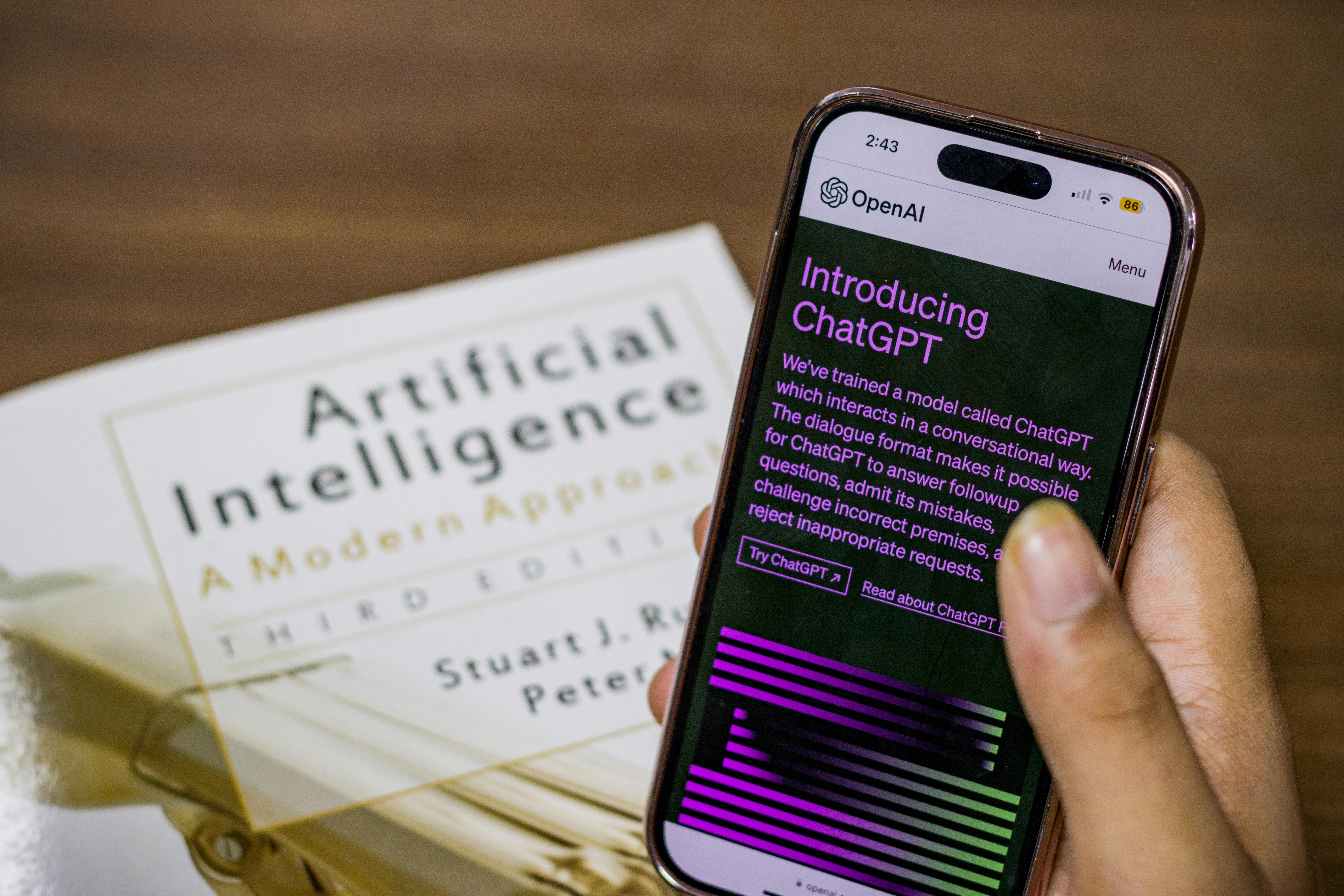
The ongoing, highly significant negotiations between OpenAI and Abu Dhabi’s state-backed artificial intelligence powerhouse, G42, to create a version of ChatGPT custom-built for the United Arab Emirates (UAE) government signal a pivotal moment in the global distribution of frontier AI technology. As reported in early February 2026, this bespoke model is being meticulously tuned to accommodate the UAE’s specific local language nuances, political outlook, and existing content speech restrictions, presenting a compelling case study in technological sovereignty and adaptation.
This collaboration transcends a typical commercial partnership; it acts as a critical litmus test for how American AI leaders will navigate an increasingly complex geopolitical landscape where market access is contingent upon deep, culturally and politically sensitive localization. It offers a tangible blueprint for the future of AI deployment in nations with distinct regulatory frameworks and governing philosophies.
Global Implications: A Model for Future Regional AI Deployments
The pursuit of a sovereign, tailored AI model by the UAE is not an isolated ambition but a reflection of a growing global trend among nation-states seeking to harness the power of generative AI while mitigating concerns over data governance, ideological alignment, and cultural relevance. This OpenAI-G42 venture is poised to become the definitive precedent for this new era of AI adoption.
Analyzing the Precedent Set by This Localized Implementation
Should this specialized ChatGPT deployment for the UAE government prove successful in meeting its complex design parameters—fluent in the local Arabic dialect and aligned with the monarchy’s political line—it will undoubtedly catalyze similar demands from other significant global markets. This establishes a new, elevated standard for what constitutes an AI model’s ‘market readiness.’ Success will be measured less by raw processing capability alone and more by the vendor’s technical agility and demonstrated willingness to engage in deep, politically salient customization.
This project moves the paradigm from a simple export model—where a standardized product is offered globally with minimal regional adjustments—to a co-development model for the world’s most sensitive and powerful technologies. It signals that for frontier AI to penetrate highly regulated or ideologically distinct economies, the technology must be structurally adapted to serve national interests and governance requirements directly. This is the template for the cautious, strategic introduction of cutting-edge AI into sovereign spheres of influence worldwide.
Challenges for American Tech Firms in Global Market Penetration
For US-based technology giants, this necessary shift represents a fundamental strategic challenge. The pursuit of a universally consistent, single product line—often favored for efficiency and brand control—becomes technically untenable and commercially disadvantageous when lucrative sovereign markets mandate significant deviations from that standard. This forces a critical strategic reckoning.
- Risk of Exclusion vs. Customization Burden: Firms must choose between risking exclusion from substantial growth territories by rigidly adhering to a universal standard, or embracing the immense operational overhead and inherent reputational risks associated with deep, bespoke customization.
- Reputational and Operational Overhead: Tailoring models involves navigating ambiguous lines of content filtering, intellectual property rights for the fine-tuned layers, and liability for content failures. Each bespoke implementation requires significant engineering effort and legal due diligence.
- The High-Stakes Pilot: The UAE project, therefore, functions as a high-stakes pilot program in managing the intricate balance between maintaining global technological leadership and implementing localized political accommodation.
The commitment to maintain the global version of ChatGPT in the UAE while tailoring a government-specific one highlights this complexity, with plans to inform users when content triggers local legal restrictions, such as those related to LGBTQ+ content inquiries.
The Broader Ecosystem: G42’s Existing Partnership Landscape
The current negotiations are deeply rooted in an already established, multi-layered strategic foundation between OpenAI and G42, chaired by Sheikh Tahnoon bin Zayed Al Nahyan, who also serves as the UAE’s national security adviser. Understanding this existing framework is essential context for the scope and ambition of the specialized government-focused model.
Synergies with Prior Agreements in Key Economic Sectors
The current push for a government-specific model represents a logical and natural escalation from earlier, broader enterprise-focused collaborations. OpenAI and G42 first partnered back in 2023 to deploy advanced AI capabilities across the Middle East region, targeting key pillars of the modern economy.
- Targeted Deployment: Initial agreements were designed to accelerate solution development by integrating OpenAI’s generative models within G42’s existing domain expertise across critical sectors, including financial services, the energy sector, evolving healthcare systems, and the administration of public services.
- National AI Mandate: This work aligns with the UAE’s overarching National Strategy for Artificial Intelligence 2031, which aims to transform the nation into a hub for AI innovation.
- Government Automation Goal: Furthermore, G42’s subsidiary, Core42, is engaged in a multi-year partnership with Microsoft to build a sovereign cloud system, supporting Abu Dhabi’s plan to automate 100 percent of government operations by 2027, backed by a $3.54 billion investment in digital infrastructure for 2025-2027.
Leveraging Existing AI Infrastructure for Inferencing and Scalability
A crucial prerequisite for this entire engagement is the massive, AI-ready infrastructure being developed in partnership with Microsoft. This existing, secure, and scalable computational backbone is precisely what will host and run the fine-tuned UAE version of ChatGPT, ensuring the necessary low latency and high data residency compliance for a government-focused deployment.
The infrastructure narrative centers on the Stargate UAE initiative, a next-generation AI infrastructure cluster located within the newly established 5-gigawatt UAE–U.S. AI Campus in Abu Dhabi. This project is part of a broader “U.S.-UAE AI Acceleration Partnership.”
- Stargate UAE Commitment: The 1-gigawatt compute cluster is being built by G42 and operated by OpenAI and Oracle, with initial capacity of 200 megawatts (MW) expected to go live in 2026.
- Microsoft Azure Integration: Microsoft is a key enabler, having invested $1.5 billion in G42 in early 2024 and contributing to a massive datacenter expansion. This expansion, delivered through G42 subsidiary Khazna Data Centers, includes a 200MW datacenter capacity increase expected to come online before the end of 2026, strengthening Microsoft Azure’s secure, scalable, and sovereign cloud services.
- Inference Hosting: G42 had previously committed its substantial AI infrastructure capacity to support OpenAI’s local and regional inferencing operations, which will be leveraged for the specialized UAE model, ensuring data sovereignty compliance.
This infrastructure foundation, built in coordination with the U.S. government, is explicitly designed to deliver nation-scale compute and low latency inferencing to meet the demands of an increasingly intelligent world, supporting the customized model’s stable operation.
The Road Ahead: Unresolved Details and Future Outlook
While the intent and general direction of the specialized ChatGPT project are confirmed, the journey from high-level negotiation to stable, operational deployment is inherently complex, given the sensitive nature of the required political and linguistic customizations. The realization of this bespoke AI hinges on resolving several critical ambiguities currently under intense discussion between the two entities.
The Current Stage of Negotiations and Technical Specifications
Initial reports confirm that the process is in the crucial, granular stage of hammering out the final specifics. This stage moves beyond general requirements to the engineering and contractual foundations of the deployment.
- Base Model and Alignment Metrics: Discussions center on determining the exact version of the base ChatGPT model to be used as the starting point for fine-tuning. Crucially, the parties are defining the precise, measurable metrics required for determining ‘political alignment’—a novel and complex specification for an AI product.
- Integration and Security Architecture: Significant engineering effort will be required to design an architecture that allows for seamless integration with existing government IT systems while maintaining the highest possible levels of data isolation and security.
- Contractual Clarity: Key contractual points under debate likely include the liability framework associated with any failures in the model’s mandated content filtering and, fundamentally, the ownership rights concerning the resulting fine-tuned layers—essentially, who owns the proprietary ‘UAE flavor’ of the model.
This intricate negotiation process signifies a move toward deeply embedded technological partnerships rather than simple licensing agreements.
Anticipated Impact on Domestic Digital Transformation Initiatives
The final, operational product is anticipated to function as a powerful accelerant for the UAE’s overarching national digital transformation agenda. Having an AI tool natively configured for the specific context of the nation is expected to unlock efficiencies that general-purpose tools could not reach.
The successful integration of this highly customized technology will mark a definitive milestone in the nation’s journey toward becoming a world leader in AI deployment and governance.
- Bureaucratic Efficiency: The model’s inherent understanding of national priorities, legal frameworks, and the precise vernacular of the government structure is projected to streamline administrative processes across various bureaucratic layers.
- Policy Enhancement: It is expected to significantly enhance the data analysis capabilities available to policymakers, offering insights framed within the national context.
- Regional Reference Point: Potentially, the UAE’s successful implementation will serve as a crucial reference point—a model for the development of other sovereign AI initiatives throughout the wider region, solidifying the UAE’s standing as a global hub for responsible, context-aware technology implementation.
This strategic move, reinforced by the massive infrastructure investments—including the UAE’s commitment to invest $1.4 trillion in U.S. infrastructure, building on the bilateral AI acceleration partnership—positions the collaboration as a cornerstone of both national digital ambition and evolving global AI diplomacy.