





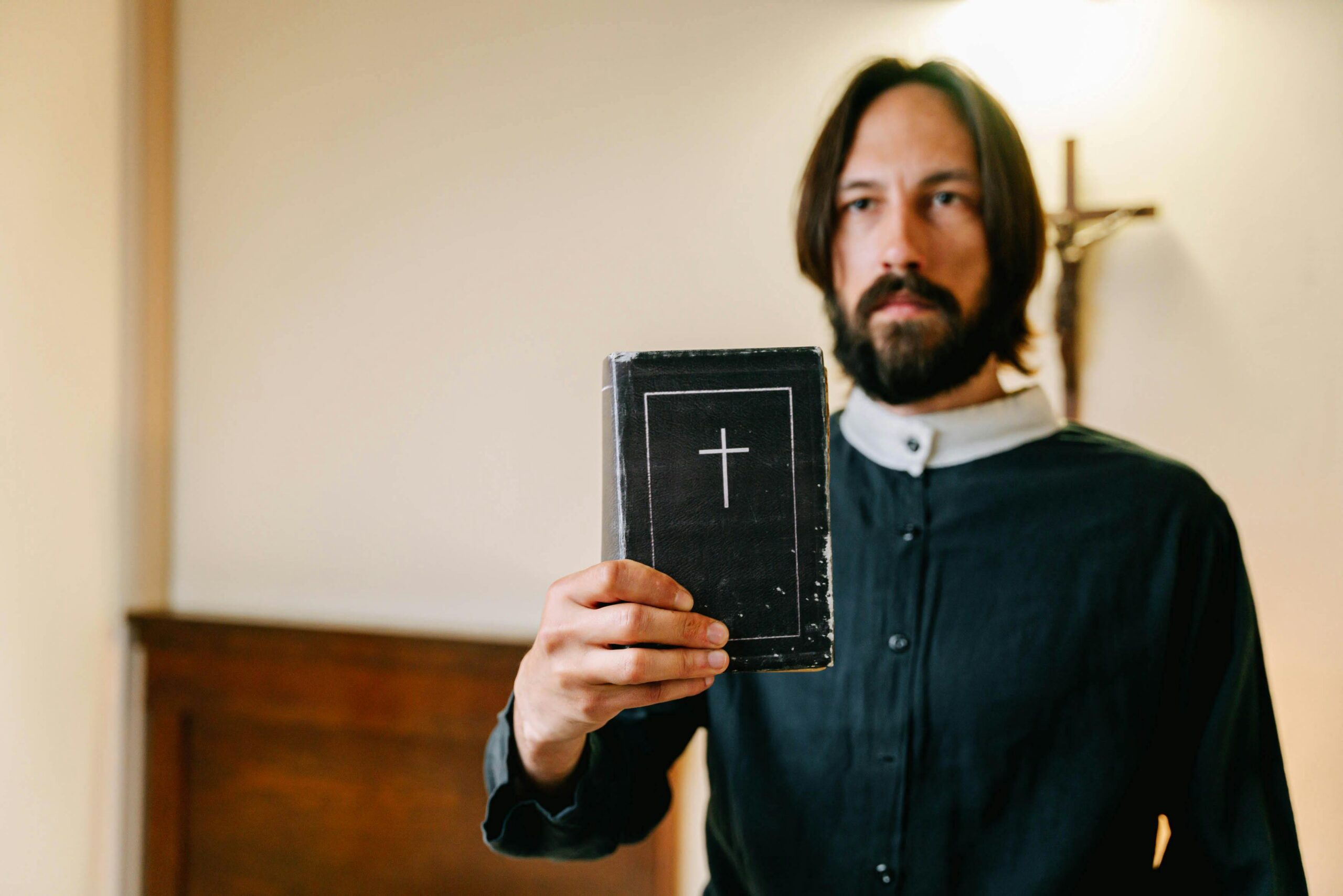
The Unmediated Word: Pope Leo XIV’s Call to Priestly Integrity Against the Tide of Artificial Intelligence

The digital landscape of the mid-2020s, characterized by the dizzying speed of artificial intelligence (AI) and the dopamine chase of social media metrics, has presented the Church with a profound set of pastoral and theological challenges. In a defining moment for his pontificate, Pope Leo XIV addressed the clergy of the Diocese of Rome on February 19, 2026, issuing a clear mandate against the insidious creep of automation into the most sacred precincts of priestly life: the preparation of the homily and the pursuit of spiritual validation through online popularity. This counsel was not a mere technological prohibition, but a deeply rooted defense of the dignitas operis, the dignity of human and spiritual labor, drawing strength from a foundational text of Catholic social teaching to give his modern warning historical weight and lasting resonance.
The Historical Echoes of Technological Disruption
To prevent his modern warning from being dismissed as mere technophobia, Pope Leo XIV thoughtfully connected his concerns about automation and the dignity of work to a foundational moment in Catholic social teaching. His chosen name, Leo XIV, explicitly referenced his predecessor, Pope Leo XIII, providing a bridge across more than a century of industrial and technological transformation. This deliberate historical framing served to establish that the current challenge of artificial intelligence is a recurrence, in a new guise, of perennial questions concerning human work, dignity, and the correct orientation of earthly progress.
Lessons from the First Industrial Revolution and Rerum Novarum
The inspiration drawn from Leo XIII and his seminal 1891 social encyclical, Rerum Novarum (On Capital and Labor), provided a crucial interpretive lens. That document addressed the social upheaval, alienation, and worker exploitation brought about by the nascent machinery of the First Industrial Revolution. The Pope in 2026 implied that the current age of artificial intelligence presents a comparable disruption, one that challenges the dignity of intellectual and spiritual labor in the same way that steam power challenged physical labor. Just as Rerum Novarum called for a just relationship between capital and labor, the present moment demands a just relationship between human intellect and algorithmic capability, ensuring that technology serves humanity, not subordinates it to its own logic of efficiency.
The Dignity of Labor in the Age of Algorithmic Output
The Pope’s reference to the historical context underscored the principle that human dignity is intrinsically linked to meaningful contribution and effort. The “dignity of work,” a concept central to Catholic social teaching, is undermined when the most meaningful aspects of that work—creation, discernment, and personal testimony—are outsourced to an unthinking entity. For the priest, the dignity of his labor resides in the spiritual exertion required to bridge the divine and the human. Using AI to bypass this exertion strips the labor of its inherent dignity, replacing the priest’s unique, God-given capacity to interpret and apply truth with a generic, replicable output. This elevates the discussion beyond simple practicality to a profound question of vocation and vocational integrity in a world increasingly defined by automated processes.
The Pastoral Imperative for Inculturation and Presence
Moving beyond the prohibition, the Holy Father articulated what must replace the reliance on generative text: a radical commitment to the priest’s specific, localized ministry. The focus shifted to the necessity of ministry being deeply rooted in the specific place and people the priest serves—a concept often termed inculturation or contextualization. This is the specific answer to the universalizing tendency of artificial intelligence.
The Demand for Faith Rooted in Lived Experience
The Pontiff instructed the Roman clergy that the faithful desire something far more tangible than expertly worded generalities. They desire to see the priest’s faith actively manifest in the context of their own community, their own struggles, and their own local culture. The offering must be “inculturated in the place, in the parish where we are working,” the Pope stated. This demands that the priest immerse himself in the specific human landscape of his ministry, allowing the theological message to be shaped by the particularities of that environment. This is an organic process, demanding time, listening, and local engagement—activities antithetical to the speed and generality of an AI prompt. The pontiff stressed the need to “know the reality well” of the community in which one lives and works.
Transmitting a Personal Encounter with the Divine
Ultimately, the priest is called to be a witness, a living testament to having personally encountered and loved Jesus Christ. The congregation does not gather to hear an optimized summary of theological positions; they gather to connect with a mediator who can speak of what he has seen and heard, the reality of Christ reflected through his own consecrated life. This relational aspect—the ability to communicate the warmth of Christ’s love through the texture of one’s own human experience—is the absolute barrier that technology cannot cross. The faith shared must be his faith, forged in the crucible of his ministry, not synthesized from a massive dataset of past human expressions. The Pope noted that AI “will never be able to share faith”.
Navigating the Broader Ethical Minefield of Artificial Intelligence
The Pope’s address to his priests served as a microcosm of a much larger, ongoing societal crisis concerning the provenance and reliability of digital information in 2026. The specific issue of AI-generated homilies was illuminated by the already existing problem of AI-generated papal content flooding the public sphere, demonstrating the immediate threat that advanced synthetic media poses to institutional trust. This challenge has been persistent since the Pope’s election in May 2025.
The Crisis of Authority Corroded by Deepfakes
The proliferation of fabricated videos attributed to the Holy Father—messages he never delivered, often touching upon political or controversial topics—represented a significant challenge to the Church’s moral authority. Such convincing forgeries erode the public’s ability to trust any digital representation of the Pope, creating a dangerous climate of skepticism. Experts noted that such deception not only makes the Pope’s genuine words less believable but could also be used strategically to build trust on a malicious channel before pivoting to disseminate outright falsehoods. The priests, as primary communicators of the Church’s authentic message, were being called to be the first line of defense against this corrosive effect by modeling integrity in their own communication practices. The Pope had previously warned that synthetic technologies threaten to distort reality unless guided by responsibility and rooted in education, underscoring that the challenge is “not technological, but anthropological”.
Platform Responsibility and the Struggle for Moderation
The context also involved a clear recognition of the difficult position of the major technology platforms tasked with policing this synthetic content. Investigative efforts had already demonstrated that social media companies struggled mightily to keep pace with the rapid creation and dissemination of high-quality, AI-generated material. Despite efforts by platforms like YouTube and TikTok to label synthetic content or terminate channels dedicated to producing deceptive papal videos, the sheer volume overwhelmed moderation systems. One investigation found numerous pages churning out AI-generated sermons and speeches in English and Spanish, with some AI-labeled videos still garnering tens of millions of views, fooling many viewers who insisted the message was “good” even when debunked. This inadequacy on the part of the platforms made the internal discipline of the clergy—their voluntary choice to reject the deceptive tool—an even more critical safeguard for maintaining the integrity of the Church’s public voice.
Mandates for Clerical Formation and Ongoing Study
In counterpoint to the temptation to rely on the passive output of a machine, Pope Leo XIV offered positive prescriptions for priestly development, emphasizing the need for continuous active engagement in both study and fraternal relationship. He reminded the clergy that the demands of the modern world require not less intellectual rigor, but more, guided by a deep commitment to ongoing personal formation.
The Necessity of Perpetual Academic and Spiritual Cultivation
The exhortation to use one’s brain was paired with a strong reminder that priesthood is a lifelong endeavor of learning. The times change rapidly, and the challenges facing the faithful—as evidenced by the rise of sophisticated digital tools—demand that clergy “always stay up to date”. This mandate for ongoing study is not an optional enhancement but a fundamental requirement for effective ministry. To retreat into intellectual complacency is to render oneself incapable of guiding a contemporary flock through its unique complexities. This intellectual discipline must, however, be anchored by a corresponding spiritual discipline, specifically urging the priests to move beyond rote recitation of prayers and to genuinely cultivate the art of listening to the Lord. The Pope stressed the need to “remain with the Lord,” not reduce prayer to mere routine.
Exemplifying Virtue in the Face of Technological Temptation
Beyond study, the Holy Father devoted significant attention to the relational aspect of ministry, stressing the importance of priestly fraternity. The struggle against technological temptation is made easier, and one’s own example is made more credible, when ministers actively support one another. A priest who cannot rejoice in the success of a fellow cleric risks falling into the isolation that makes superficial digital validation so appealing. The Pope addressed the reality of clerical envy—invidia clericalis—and urged his priests to nurture true friendships, suggesting shared study, reflection, prayer, and meals as antidotes to isolation. By fostering genuine friendship and mutual support, the clergy collectively set a higher standard of example, grounding their ministry not in individual performance metrics, but in the shared, supportive life of the Body of Christ. This communal grounding is vital, especially for younger priests who risk exhaustion and loneliness in a “more difficult and less rewarding” social context.
Conclusion and Forward Trajectory for Ministerial Integrity
The counsel delivered by Pope Leo XIV on February 19, 2026, was a defining statement for the pastoral direction of the Church in the middle of the contemporary technological upheaval. It served as an urgent call to re-center the ministry of the Word on the irreplaceable value of the human person—the prayerful, fallible, yet grace-filled priest—over the flawless, but empty, efficiency of the machine. This moment was less about banning a tool and more about reaffirming the essence of the office itself, demanding a return to the source of ministerial authority.
A Call for Humble Self-Reflection in the Priesthood
The directive concluded with an imperative for profound introspection. The question was posed, not to the digital world, but to the heart of each priest: “Who are we and what are we doing?”. If the efforts in preaching and digital engagement are not effectively transmitting the central, saving message of Jesus Christ, then the entire enterprise risks becoming a profound mistake, an exercise in misplaced effort. This required a humble stripping away of ego and ambition, forcing a clear-eyed assessment of one’s ministry through the lens of eternal consequence rather than temporal popularity. The Pope also directly addressed the allure of ‘likes’ and ‘followers’ on platforms like TikTok, warning that seeking validation there is an “illusion” that mistakes digital performance for authentic self-offering.
Affirming the Enduring Value of Unmediated Ministry
In its totality, the message reinforced the enduring truth that ministry is fundamentally about transmission—the passing on of a mystery that originates outside the human will. The continued development of artificial intelligence in 2026 served only to highlight, by contrast, the supreme value of the unmediated, personal, and authentically human element of faith. The priest’s role is to stand as an authentic conduit, a flawed but necessary human presence through which the divine is encountered, a role that no sophisticated algorithm, no matter how cleverly designed, can ever truly usurp. The path forward demanded that clergy choose the difficult, human road of prayerful preparation and genuine witness over the easy, illusory path of digital expediency.