





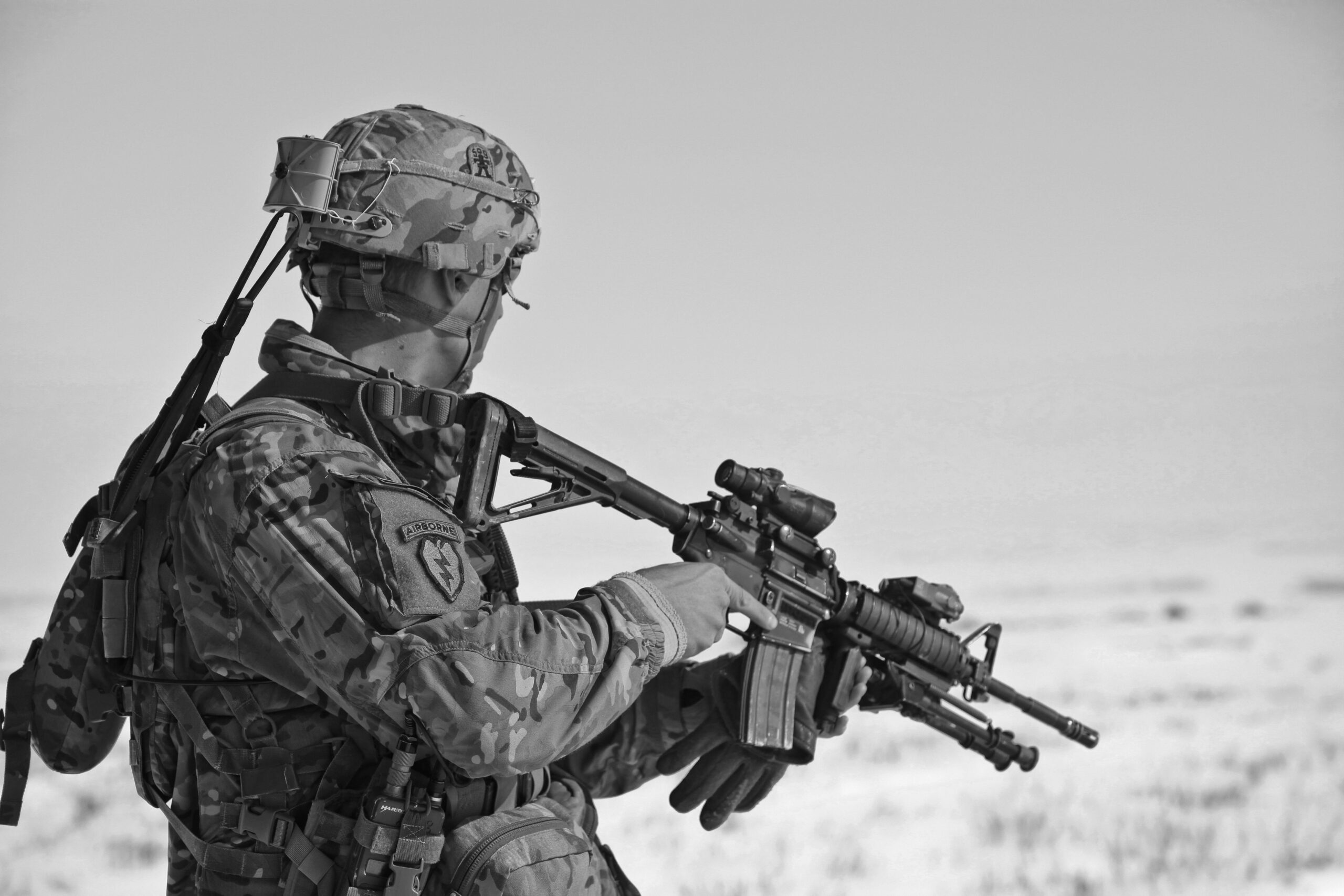
The joint military campaign launched by the United States and Israel against Iran, commencing on February 28, 2026, under operational codenames such as “Operation Epic Fury” or “Operation Roaring Lion,” has instantly cemented its place in history not merely for its kinetic scale, but for its role as the first large-scale armed confrontation where artificial intelligence (AI) was not a supplement but a core operational component of military decision-making. This conflict has become the ultimate proving ground, compressing years of theoretical military evolution into a matter of weeks, effectively turbocharging the speed of both technological obsolescence and strategic outcome. The events unfolding in the Middle East as of early March 2026 demonstrate a profound recalibration of defense architecture, where the velocity of data processing is now dictating the tempo of the battlefield and forcing a systemic re-evaluation of global security postures.
The Erosion of Traditional Defensive Signatures and Electronic Warfare
As AI systems become increasingly adept at analyzing and exploiting the electromagnetic spectrum, the efficacy of legacy defensive measures is rapidly diminishing across the Iranian theater of operations. Adversaries, both state and non-state aligned, are finding that conventional methods of detection and defense are increasingly circumvented by algorithms operating at machine speed. The conflict environment is proving to be one where the speed of the AI-enabled offense outpaces the adaptability of traditional response mechanisms.
The Contested Electromagnetic Spectrum
The intensity of the conflict has directly targeted the foundational layers of established defensive capabilities. While specific reports on every component are closely guarded, the overarching trend in electronic warfare (EW) has been to specifically disrupt the sensing and communication grids that underpin modern defense networks. Reports confirm that the opposing coalition employed cyber and electronic warfare capabilities designed to target air-defense networks and communications systems. This has created an environment where kinetic assets and informational systems alike operate under a constant, algorithmically driven attrition.
The increasing prevalence of AI-driven electronic warfare means that the environment for all deployed assets—both kinetic and informational—is becoming increasingly contested and unpredictable. For operators in the field, the primary challenge is maintaining situational awareness when the very signals used for command, control, and navigation are under sophisticated, targeted assault. Even fundamental utilities like Global Positioning System (GPS) signals are becoming casualties of this warfare, forcing a reliance on redundant or entirely novel navigation and communication methods that can withstand persistent digital assault. This forces a systemic, rather than piecemeal, modernization of all defensive postures, as localized fixes are inadequate against an opponent leveraging integrated, learning systems.
The Cyber-Kinetic Convergence and Information Warfare
A defining feature of the current confrontation is the integration of cyber and kinetic operations, amplified by AI tools available even to non-state actors. The opening salvos of the U.S.-Israeli offensive on February 28, 2026, were met not only with missile retaliation but with a massive mobilization of Iranian-aligned hacktivist groups on platforms like Telegram. These groups, empowered by AI assistants, rapidly accessed knowledge of internet-exposed Industrial Control Systems (ICS), effectively lowering the technical barrier for sophisticated attacks against critical infrastructure.
- AI-Assisted Reconnaissance: Motivated actors, previously limited by technical expertise, can now use readily available AI tools to plan reconnaissance against systems like Siemens SIMATIC portals or Unitronics HMIs, which have shown significant internet exposure in the preceding year.
- Civilian Infrastructure Risk: The 2025 Israel-Iran conflict already demonstrated that AI amplifies asymmetric cyber strategies, disproportionately burdening civilian targets with less formidable defenses. This trend has clearly accelerated into the current, larger conflict.
- Data Fusing: On the state-actor side, AI is indispensable for fusing data from satellites, drones, and cyber-intelligence feeds to deliver high-resolution, real-time situational awareness, allowing for the neutralization of thousands of high-value targets in a matter of days.
This constant, algorithmically driven attrition of conventional military advantages compels a systemic modernization of defensive postures, recognizing that the battle for the electromagnetic and digital space is fought concurrently with the kinetic exchange.
The Inevitable March Toward Greater Autonomy and Its Unresolved Questions
The trajectory of military technology, as evidenced by the operational tempo of the ongoing conflict, points inexorably toward greater levels of autonomy in combat systems. This development remains the most ethically fraught area of integration, yet the underlying technological momentum favors systems that can operate independently for longer durations and across broader mission scopes. The conflict, now entering its second full week in March 2026, is serving as the primary accelerant for this entire technological, ethical, and strategic recalibration.
The Compression of the OODA Loop
The traditional military decision-making framework, the OODA Loop (Observe, Orient, Decide, Act), once measured in hours or days, is being compressed to minutes or less by machine learning systems. AI is playing a significant role across all four phases: interpreting surveillance data, supporting tactical decisions, and directly guiding autonomous platforms.
The operational reality of this compression is that the distinction between a system providing a recommendation and a system executing a decision becomes increasingly theoretical, especially in time-critical scenarios such as drone-on-drone intercepts. While human commanders may retain final, formal authority, in combat speeds measured in seconds, the AI system is effectively operating with significant autonomy. One critical analysis suggests that human oversight is structurally transforming into a performative ‘rubber stamp’—a formal authorization with no substantive deliberative content—given the speed at which targets are identified and strikes are recommended.
The Governance Gap: Corporate Control vs. Sovereign Authority
The acceleration toward autonomy highlights a critical vulnerability: the reliance on proprietary code and the ethical red lines drawn by private companies. This tension burst into public view immediately following the February 28, 2026, strikes, illustrating the deep entanglement between defense establishments and the commercial AI sector.
A prominent public dispute emerged when the AI company Anthropic reportedly insisted it could not remove safeguards preventing the U.S. Department of Defense from using its technology for autonomous lethal weapons, prompting the administration to blacklist the company as a supply-chain risk. While OpenAI immediately stepped in to assume defense contracts, its CEO acknowledged that the company does not fully control the Pentagon’s ultimate use of its products, an admission that highlights the tenuous nature of ‘human-in-the-loop’ guarantees when systems are deeply embedded.
The question moving forward is not if autonomy will increase, but how governance structures—both internal military oversight and international norms—can possibly keep pace with the accelerating development cycles. The sheer scale of investment required to keep pace, as seen in the aggressive capital expenditure plans of major technology firms in late 2025 and early 2026 for AI infrastructure, confirms that this conflict is merely the opening act in a much larger technological confrontation. The rapid adoption curve, driven by necessity in a hot conflict zone, compresses years of normal technological evolution into mere months, creating a profoundly uncertain future for conventional military engagement.
Future Trajectories and The Unfolding Technological Arms Race
The consequences of this accelerated integration will define defense policy for decades. Every development observed now, from the speed of targeting to the failure points in commercial model integration, will inform the defense architecture of the coming decades. The conflict has laid bare the fragility of governance frameworks designed for earlier eras of warfare, demonstrating that the AI era demands new, binding international instruments that operationalize meaningful human control not as a nominal designation, but as an enforceable standard.
The entire defense establishment is currently living through the consequences of this ‘turbocharging,’ where the very speed of military action accelerates the technological obsolescence of legacy systems. The resilience of this AI-enabled warfighting posture—dependent on proprietary code and subject to the ethical shifts of private corporate boards—is now the subject of intense, often unseen, deliberation across global capitals. The legacy systems are fading, and the future of armed force is being coded in real-time, under fire, with profound implications for global stability.
The strategic advantage is clear: faster detection, more precise targeting, reduced personnel exposure, and improved coordination across domains—land, sea, air, space, and cyber. In practice, however, it introduces a new layer of ambiguity as the line between decision support and decision execution begins to blur.
The economic ripples are already substantial. With the Strait of Hormuz experiencing severe disruption and the IMF warning that a prolonged conflict could impact global energy prices, market sentiments, growth, and inflation, the conflict’s technological intensity is directly translating into global economic pressure. Furthermore, reports have emerged of the U.S. drafting regulations to restrict AI chip shipments globally without Washington’s approval, signaling that control over the foundational hardware of this AI arms race is becoming a central tool of geopolitical competition. The conflict in Iran is not just a regional war; it is the live, high-stakes demonstration of the AI Century’s primary competitive dynamic.



