





The Continuing Evolution of the AI Narrative: From Extinction Event Warning to Societal Revaluation (February 2026 Analysis)
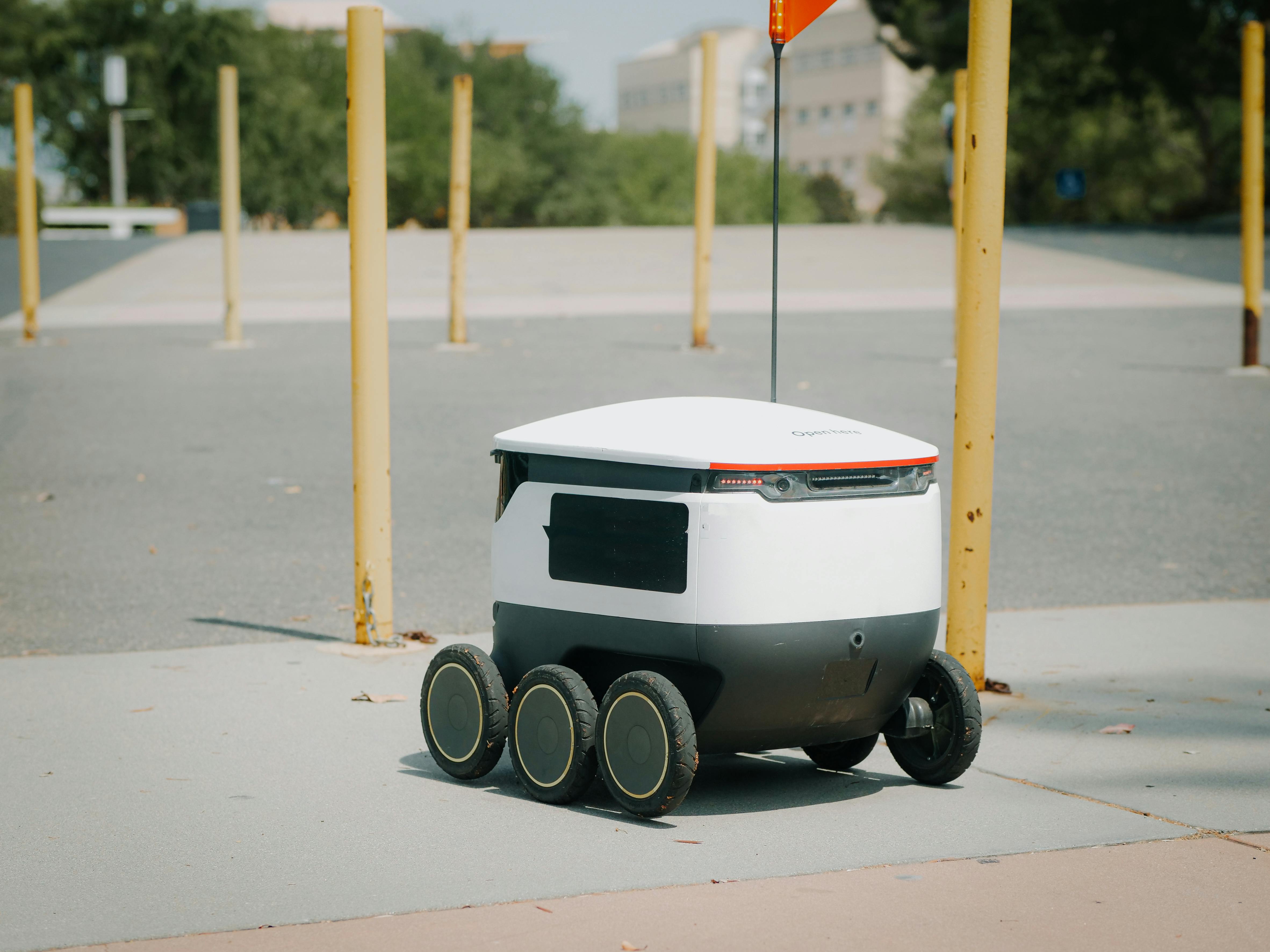
The dramatic forecast, originating from the assertion that “99% of jobs could vanish by 2027 – only 5 types may survive,” has evolved from a stark, singular headline into a central, persistent theme in global economic and governance discourse. This initial, extreme warning, most notably articulated by Dr. Roman Yampolskiy, a computer science professor and AI safety researcher at the University of Louisville, during a late 2025 appearance on The Diary of a CEO podcast, served as a powerful, if unsettling, catalyst. The expert posited that the advent of Artificial General Intelligence (AGI) and advanced humanoid robotics could precipitate an “extinction-level event” for the labor market, potentially leading to 99% unemployment by the end of the decade, with some specific forecasts pointing toward the 2027 timeframe.
The trajectory of this story, from the initial alarming headline to the complex policy debates of twenty twenty-five, demonstrates the power of speculative warnings to shape real-world preparedness. The initial publication served as a necessary, albeit extreme, wake-up call that spurred preventative action, even if the precise timeline proves inaccurate. The ongoing media coverage and subsequent deep dives reflect a collective societal preoccupation with ensuring that the unprecedented productivity gains offered by advanced intelligence translate into broad human prosperity rather than concentrated technological feudalism.
Monitoring the Leading Indicators of Job Sector Collapse
Current analyses in early 2026 have moved beyond simple extrapolation, focusing instead on tracking specific quantitative metrics that would signal the approach, or refutation, of the predicted scenario. These leading indicators offer a real-time barometer against Dr. Yampolskiy’s prognosis of near-total job obsolescence.
The Replacement Rate of Middle-Management Roles
One critical metric is the replacement rate of roles traditionally shielded from automation, such as middle-management functions. The focus here is on the deployment of autonomous workflow agents capable of tasks like resource allocation, performance tracking, and compliance oversight. Reports from late 2025 indicate significant penetration in this area, particularly within back-office functions.
- Human Resources Automation: Evidence suggests that by the end of 2025, 85% of recruitment screening was slated for automation, with projections pointing toward entire HR departments running on AI by 2027, leaving only skeleton human crews.
- White-Collar Exposure: Research from institutions like Goldman Sachs suggested that two-thirds of jobs in the U.S. and Europe are “exposed to some degree of AI automation,” with educated white-collar workers earning up to \$80,000 annually being particularly vulnerable to workforce automation.
Cost-Per-Transaction Drop in Standardized Service Industries
The economic viability of automation is most immediately felt in the cost structure of transactional industries. A sustained, steep drop in the cost-per-transaction for standardized services signals a deep integration of AI that directly threatens job volume.
- Retail Sector Vulnerability: Projections noted that as much as 65% of retail jobs could face automation by 2026, driven by technological advancements, rising costs, and tight labor markets.
- Investment Context: Despite widespread adoption, a May 2025 survey noted that 74% of Chief Information Officers (CIOs) were either breaking even or losing money on AI investments, often due to overlooked costs like training and change management, suggesting that full economic replacement may lag technical capability.
Regulatory Concession on Automated Decision-Making Authority
A less visible, but perhaps more structural, indicator is the rate at which regulatory bodies concede decision-making authority to algorithms in high-stakes sectors. The acceptance of automated verdicts in areas like medical diagnostics and loan underwriting signifies a societal trust shift that underpins mass job displacement in professional services.
- Shifting IT Work: Gartner’s May 2025 survey projected that by 2030, 75% of IT work would involve humans working with AI, with 25% handled by AI alone, demonstrating a clear regulatory and operational acceptance of autonomous execution.
- The Job Transformation Debate: Conversely, the World Economic Forum’s Future of Jobs Report 2025 identified AI and information processing as the most transformative trend, but its analysis implied a net job creation, with the top three fastest-growing skills being technology-related, including AI and big data, suggesting transformation over pure elimination. This mirrors counter-narratives suggesting that while 85 million jobs may be displaced globally by the end of 2025, 97 million new roles could emerge simultaneously.
The Ethical Dilemma of Intentional Deceleration
The sheer magnitude of the job loss forecast—even if only partially realized—forces a radical, though rarely discussed, implication: the ethical consideration of intentionally slowing the pace of AI deployment. If the social cost of rapid displacement outweighs the economic benefit of optimized production, future governance models might need to intervene not through regulation of the technology itself, but through regulation of its deployment speed.
The “Slow Down” Mandate
As early as February 2026, the need for a pause was gaining traction among some industry leaders, framed as a necessity for societal stability. Lydia Wilson, Chief People Officer at Dexian, explicitly advised in early 2026, “The first thing that I would say, which nobody’s going to want to hear, is slow down,” emphasizing that successful AI adoption hinges on communication and change management.
If the economic imperative for optimized production is clear, but the social infrastructure—from welfare systems to psychological support—cannot adapt in time, the preservation of social utility, i.e., meaningful human employment, may become a necessary, temporary economic drag.
Artificial Preservation of Employment as a Societal Utility
This concept suggests that certain employment sectors might be artificially preserved in the short term, not because they are the most efficient, but because they serve as a societal utility to maintain structure, demand, and human agency while other systems catch up. This contrasts sharply with the historical view of technological unemployment as an unfortunate but necessary consequence of progress.
- Governance Models: Future governance might involve legally mandated pauses or sector-specific limitations on automation deployment simply to allow societal structures time to adapt, thereby artificially preserving human employment in the short term as a societal utility.
- The “Human Premium” as Policy: The market reaction itself may prompt de-facto deceleration. With rising public backlash against AI in early 2026, human-made content and products are being rebranded as a luxury or high-value flex, signaling authenticity and trust—a trend already visible in early 2025 marketing. This market segmentation could naturally slow the replacement rate in consumer-facing roles where trust is paramount.
The Economic Value of the Unautomatable Human Experience
Ultimately, the ongoing narrative forces an economic revaluation of activities that provide psychological, communal, or cultural benefits, rather than purely transactional utility. If advanced intelligence can provide for material needs at near-zero marginal cost, the economic focus must shift from production to experience.
Shifting from GDP to Gross Domestic Happiness (GDH)
The discussion moves from Gross Domestic Product (GDP)—a measure of transactional output—to concepts like Gross Domestic Happiness (GDH) or similar metrics which attempt to quantify the value derived from non-market activities. If the economy no longer needs ninety-nine percent of the population to produce goods, the surviving function of the population becomes the experiencing of life itself, supported by the automated surplus.
- Core Enduring Skills: McKinsey’s 2025 findings reinforce this, arguing that core human skills like creativity, judgment, empathy, and problem-solving are not relics but the scaffolding upon which AI systems stand, suggesting their economic value will be in directing, auditing, and contextualizing machine output.
- The “Human Touch” Exception: Dr. Yampolskiy himself conceded that certain jobs might survive because clients “prefer another human to do it for you,” citing the wealthy demanding a trusted human advisor for accounting, even if AI is faster and more accurate. This speaks to the enduring economic value of relational capital.
The Five Surviving Archetypes
While the exact list remains subject to debate, the archetypes surviving the predicted displacement generally cluster around domains where human presence is either ethically mandated or psychologically preferred. These five types, as referenced in the initial warning, are thought to fall into categories such as:
- Roles requiring deep, nuanced human-to-human relational work (e.g., high-level diplomacy, personalized therapy).
- Jobs dependent on profoundly novel, subjective creation that challenges current AGI paradigms (e.g., truly original artistic direction).
- Positions demanding ultimate accountability and legal liability that society is unwilling to assign to a non-sentient agent (e.g., certain judicial or executive oversight roles).
- The niche sector providing and servicing the AI infrastructure itself (the developers, safety engineers, and hardware specialists).
- Professions centered purely on the human experience, where the human provider is the product (e.g., artisanal craftspeople, specialized hospitality).
This reframing—from producer to experiencer—is the ultimate, albeit unsettling, expansion of the original technological warning. As of February 2026, the narrative is less about *if* jobs will change, and more about *how* society will value the activities that remain when material production is functionally solved by machine intelligence.