






OpenAI Launches Group Chats in ChatGPT: Tiered Availability and The Future of Collaborative AI
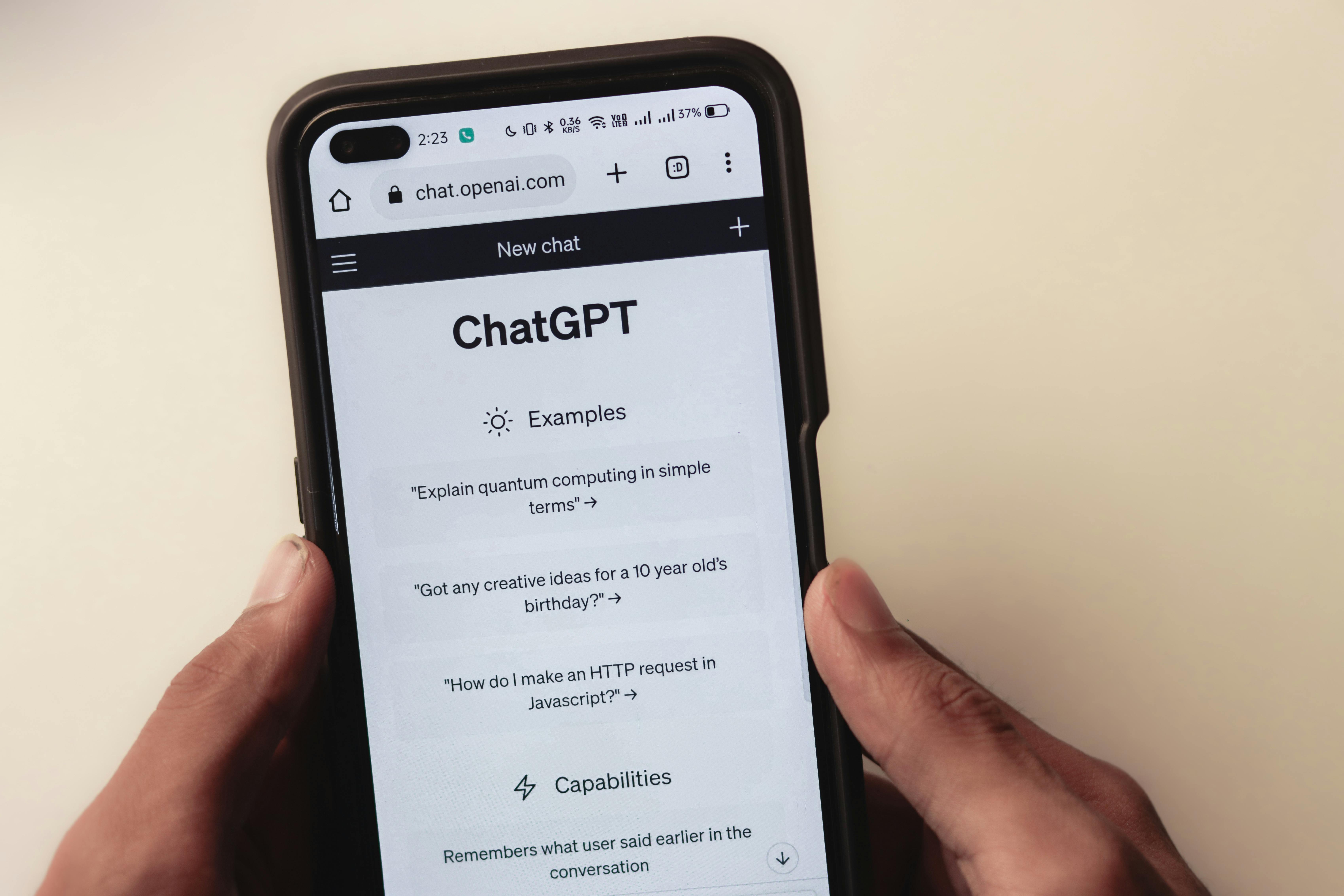
As of late November 2025, the landscape of personal AI assistance has fundamentally shifted with OpenAI’s global rollout of Group Chats in ChatGPT. This significant development transforms the flagship application from a primarily individual productivity tool into a shared collaborative workspace. Following a highly successful pilot phase in key Asian markets, the feature, which allows up to twenty users to converse with the AI simultaneously, is now accessible to the vast majority of the platform’s user base. This article details the nuanced subscription model implications of this launch and explores the strategic trajectory OpenAI is charting for shared AI spaces, emphasizing the current architecture and ethical considerations as of this moment in late 2025.
Tiered Availability and Subscription Model Implications
The accessibility strategy behind the group chat feature is a clear signal of OpenAI’s intent to embed ChatGPT into the daily collaborative habits of its largest possible user base. Unlike features heavily gated behind the highest-paid tiers, the collaborative utility is distributed broadly, though not universally.
Universal Access Across Core Consumer and Pro Plans
A core element of the global deployment is the commitment to broad accessibility across the main consumer subscription lines. The group chat functionality has been made available to all logged-in users across the established non-enterprise tiers as of November 20, 2025. This comprehensive inclusion ensures that the feature is not strictly locked behind a premium paywall, fostering widespread adoption immediately. Specifically, the feature is available to users on the foundational Free tier, those subscribed to the introductory Go plan, the standard Plus membership, and the highest-tier Pro service.
Explicit Exclusions for Commercial and Institutional Accounts
While the rollout is broad for individual users, specific high-volume or institutionally managed account types are explicitly excluded from accessing this particular collaborative feature at the time of the general launch. This strategic omission aims to manage potential server load associated with these high-demand segments while the feature matures and to allow for the development of tailored administrative controls. The excluded categories specifically encompass Education subscriptions, the managed Enterprise suites, and dedicated Business subscription plans.
The Relationship Between Plan Tier and AI Performance in Groups
Though users from any tier can collaborate within the same chat instance—up to the twenty-member limit—the underlying artificial intelligence powering the responses remains dynamically managed based on the individual user’s subscription level, as governed by the advanced GPT-5.1 Auto architecture. This means that while a Free user and a Pro user can participate in the same active session, the underlying model instances allocated to service their respective inputs and requests may differ significantly in priority, available computational resources, and access to specialized reasoning modules. For instance, paid tiers have access to a model picker, allowing manual selection between GPT-5.1 Instant and GPT-5.1 Thinking, whereas Free users rely solely on the auto-router with stricter message quotas. The experience is consistent in principle, but the resource allocation for high-demand operations will inherently favor higher-tier subscribers, reflecting existing tiered service agreements.
The Rate Limiting Protocol in a Multi-User Environment
System stability in this novel multi-user environment is maintained through carefully calibrated operational constraints, specifically concerning rate limiting. In the context of a group chat, the constraints imposed on message frequency or token generation are tuned with a crucial differentiation. Critically, the rate limits are applied exclusively to the AI’s responses to the collective prompts. The inter-user communication—the messages exchanged between the human participants themselves—is explicitly not subject to these same rate restrictions. This design choice ensures that the flow of human collaboration remains fluid and uninterrupted by system throttling, while the AI’s output generation is managed to prevent overload across all participants.
Strategic Trajectory and Future Evolution of Shared AI Spaces
The current deployment of group chats is explicitly framed by OpenAI as the inaugural step in a much larger, more ambitious roadmap for social AI integration. The aspiration extends far beyond simple information retrieval during a group session, pointing toward a future where the AI is a persistent, proactive partner in group endeavors.
The Long-Term Vision: AI as an Active Dialogue Partner
The organization’s stated aspiration is for the artificial intelligence to evolve into a more persistent and proactive entity within ongoing group dialogues. The future vision involves the AI not just responding when tagged, but actively assisting the group in formulating complex plans, generating novel creative assets, and, most importantly, successfully translating those plans into concrete, actionable outcomes. This points toward a future state where the AI possesses a persistent understanding of the group’s overarching goals across multiple, asynchronous sessions. Industry analysis suggests this could evolve into the AI serving as a permanent “AI Team Member,” maintaining institutional knowledge for long-term projects and onboarding continuity across personnel changes.
Integration with Broader Ecosystem Tools for Workflow Completion
The introduction of this collaborative layer strongly suggests an imminent push to integrate these shared sessions with external productivity and creative software. Given that group chats are designed for planning trips, drafting documents, and organizing research, the next logical progression is seamless integration with calendar applications, cloud storage services, and collaborative document editors. This would allow a group to transition directly from a decision made in the chat—such as selecting a meeting date or outlining a report structure—to an action executed in an external application, all facilitated by the AI’s context awareness.
Anticipation of Advanced Social Intelligence Features
The incorporation of initial social features like context-aware silence, emoji reactions, and the use of profile photos suggests an ongoing, intensive investment in enhancing the AI’s social intelligence quotient (SQ). Future refinements will likely focus on improving the AI’s ability to detect nuanced emotional undertones, mediate more complex interpersonal dynamics within the group, and perhaps even take on designated roles—such as a dedicated time-keeper or a summarization agent—without explicit prompting, based on the recognized structure of the conversation. This teaching of “social behaviors” is a key focus to make the AI a more natural participant.
The Ethical and Regulatory Landscape Surrounding Shared AI Data
As this feature moves from pilot to global standard in late 2025, the regulatory and ethical scrutiny surrounding shared user data will inevitably intensify. The developer has already navigated contentious legal challenges regarding data transparency, as evidenced by the ongoing litigation concerning the retention of user conversation logs. The commitment to keeping group chats entirely separate from memory training datasets is a direct preemptive measure against data leakage into personalized models, and the absence of persistent group memory is a key privacy differentiator from one-on-one chats. The industry and the public will be watching closely to ensure this covenant of data segregation holds true as the complexity of the shared conversational models increases. The long-term success of this social pivot hinges on maintaining, and proving, an unwavering commitment to user privacy in a multi-party environment, especially given recent reports of policy shifts allowing law enforcement access under specific threat criteria.
The Impact on Traditional Communication Modalities
The accessibility of this powerful, shared AI assistant fundamentally challenges the utility of traditional communication tools for specific task sets. When a group can achieve planning consensus, content drafting, and decision-making synthesis within one thread with the immediate aid of a super-intelligent model, the need to switch between dedicated messaging, task management, and research aggregation applications diminishes significantly. This feature possesses the potential to consolidate several digital workflows into the ChatGPT application itself, leading to a measurable shift in how many users structure their daily collaborative interactions across professional and personal domains.
The Possibility of Role Assignment and Delegated AI Tasks
As the AI’s social intelligence advances, the next evolution could involve the explicit assignment of roles beyond simple querying. A group might delegate the task of monitoring external news feeds related to their project, with the AI autonomously summarizing new developments only when a human prompts it, or assigning it the role of a devil’s advocate to challenge proposals. This move from a reactive assistant to a proactive, task-delegated team member would further solidify its position as an essential, integrated component of the group structure, moving far beyond the current capability of simply responding when tagged or reacting with an emoji. The potential for assigning semi-autonomous sub-tasks to the AI within the shared space is immense and aligns with the vision of the AI taking a more active role in group dynamics.
Future Iterations in Group Capacity and Persistence
While the current limit sits at twenty individuals, the developer may explore loosening this constraint for specific, verified institutional use cases or for less context-intensive interactions where high cognitive load from the AI is not required. Furthermore, the current creation process, which results in a new chat upon adding members to an existing one (preserving the original thread separately), may eventually evolve into a true, persistent group entity where the context is meant to flow unbroken across conversion points, allowing for more complex, long-term group projects that span months rather than single planning sessions. The long-term architecture might support nested discussions or topic-specific channels within a single group identifier, mirroring proven success in established social platforms, but with the added layer of AI moderation and contribution. The refinement process is explicitly stated as ongoing, guaranteeing that these architectural limitations are subject to future revision based on user demand and system capability maturation. The entire scope of this launch implies that the future of the platform is inherently collective, moving away from the individual’s screen to the shared digital table where decisions are made and plans are forged with digital assistance at the core of the exchange. This dedication to cross-platform consistency is vital for a feature designed to coordinate real-world activities, further supported by parallel developments like the recently previewed ChatGPT Pulse for mobile Pro users, which optimizes the handheld experience for these new shared interaction models.



