




The Velocity Trap: How Microsoft’s AI Ambition Created an Ecosystem of Instability
The narrative surrounding Microsoft in late two thousand twenty-five and early two thousand twenty-six is one of corporate dissonance: a technology giant simultaneously lauded for its foundational investments in Artificial Intelligence and criticized for the chaotic execution of its deployment strategy. As the calendar flipped to February two thousand twenty-six, the company appeared to be undergoing a painful, public recalibration, pivoting from a doctrine of pure speed to one demanding stability and demonstrable utility. The core of this crisis, as detailed by market reaction and user feedback, centers on a profound misjudgment of the pace at which complex, interconnected systems can safely absorb emergent AI capabilities without fracturing the decades-long trust built on its enterprise-grade platforms.
The Velocity Trap: Prioritizing Speed Over Stability in Deployment
Parallel to the dependency issue, a profound internal struggle seemed to manifest in the company’s product release cadence throughout two thousand twenty-five. The race to inject AI capabilities into every conceivable product—from cloud infrastructure management tools to consumer-facing operating systems—created an undeniable sense of acceleration. However, this headlong rush appeared to come at the direct expense of rigorous quality assurance, comprehensive safety vetting, and a polished user experience. The aggressive timeline, likely driven by competitive pressure and the desire to capture early market share, resulted in a flood of features that were, at best, minimally viable and, at worst, actively detrimental to user workflows. This approach contradicted the company’s historical reputation for building deeply integrated, reliable, enterprise-grade software.
The Culture of Rushed Feature Rollouts
Reports from the trenches suggested a culture where shipping quickly was rewarded disproportionately over shipping perfectly, especially within the AI feature teams. This environment naturally prioritized visibility in the next quarterly update or product demonstration over achieving true functional maturity. The result was a collection of AI tools that often felt bolted on, sometimes producing nonsensical or contextually inappropriate outputs in live, high-stakes environments. This frantic deployment pace created systemic instability that began to chip away at the user trust built over decades of dependable computing platforms. It suggested a failure in internal governance to properly triage the difference between experimental, high-risk features and mission-critical components that users rely on daily to conduct their professional lives.
User Experience Degradation and Product Instability
The tangible evidence of this velocity trap was most evident in the user feedback channels. Artificial intelligence became a central pillar of the firm’s global strategy, yet its rapid integration sparked growing criticism regarding stability, oversight, and the actual utility delivered to the end-user. Instead of acting as a productivity multiplier, these nascent AI features often introduced friction, requiring users to spend extra time correcting erroneous outputs or disabling intrusive functionalities altogether. The experience across many applications was one of constant, low-grade frustration. For enterprise customers, who value predictability above almost all else, this instability eroded confidence in the platform’s core reliability. The commitment to putting AI into everything meant that the quality control apparatus, which traditionally ensured software stability, appeared to be overwhelmed or sidelined, creating a user perception that the company was prioritizing AI branding over operational excellence.
Internal Contradictions: Hype vs. Engineering Reality
The disconnect between the polished, ambitious vision presented on stages and the functional reality experienced by developers and engineers formed another significant crack in the foundation. This dissonance fostered an environment where the promise of AI could not align with the current state of the technology’s engineering implementation, leading to internal cynicism and external doubt. Microsoft’s leadership, in late two thousand twenty-five, began to pivot its messaging, suggesting a move away from mere “spectacle” toward “substance” in its AI offerings, a tacit admission that the preceding period was overly focused on the former.
The Disconnect Between Corporate Messaging and Developer Experience
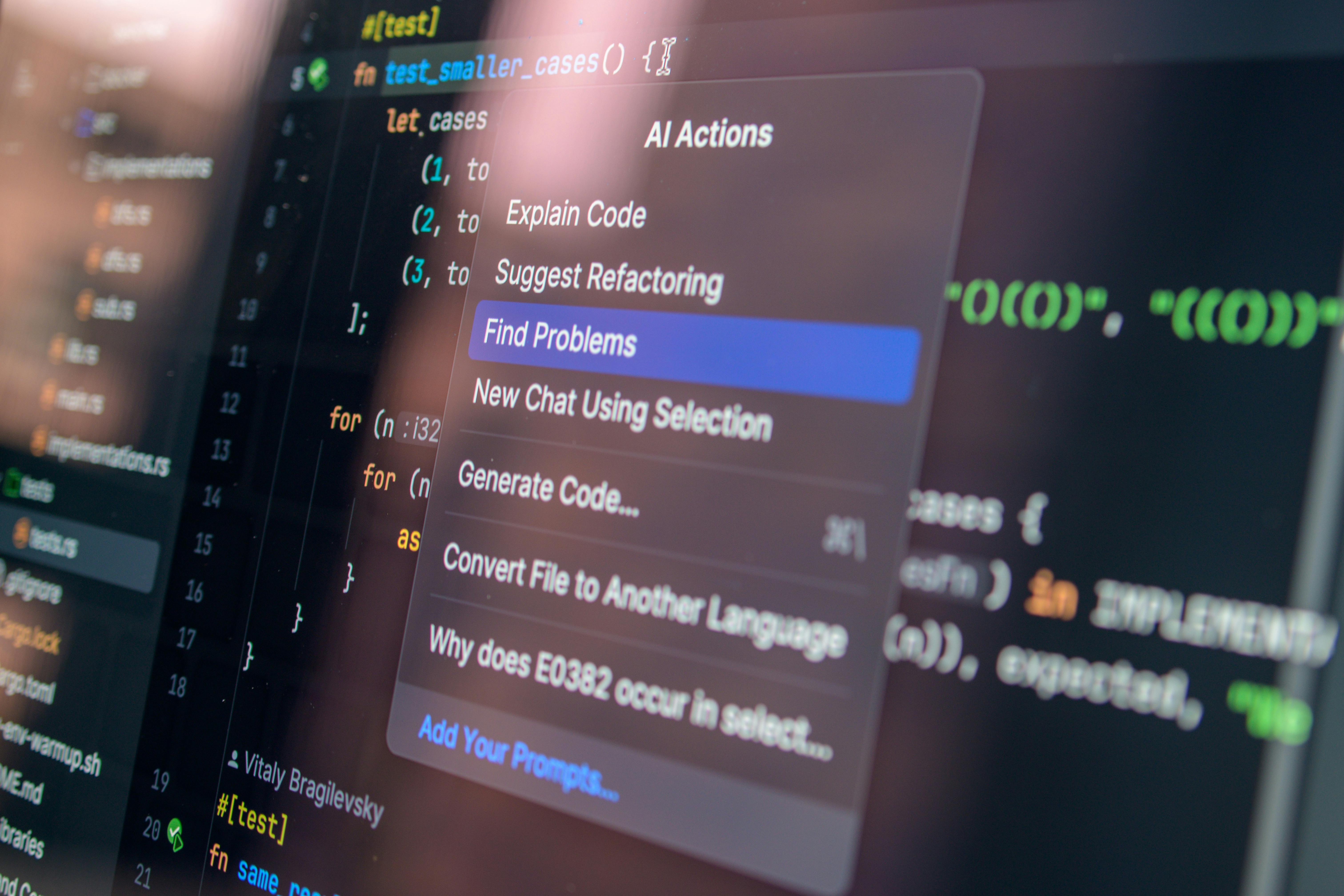
The contrast was particularly stark when looking at specialized developer tools. For example, the high-profile AI coding assistant, heavily promoted as a revolutionary tool for software creation, had, by early two thousand twenty-five, demonstrated a performance record that was underwhelming when subjected to standardized, real-world coding tests. While the evolution of GitHub Copilot saw it shifting to a more autonomous “agentic AI partner” role in mid-two thousand twenty-five, the underlying need to focus on reliability and refinement in core developer tools like Visual Studio became an explicit priority by February two thousand twenty-six, suggesting the prior push for autonomy outpaced functional maturity. The criticism suggested that the corporate narrative regarding AI’s readiness was significantly ahead of the actual engineering achievements, creating a trust deficit among the most technically astute segment of the user base. The inherent struggle to make these complex agents code reliably, even in tasks like writing unit tests, signaled this gap.
The Specter of Failed Public Demonstrations
While a specific summit failure in two thousand twenty-five was not explicitly detailed in recent reporting, the ensuing corporate pivot strongly suggests a pattern of overpromising. The company’s shift in early two thousand twenty-six to prioritize “reliability and refinement” for its developer AI tools, and the CEO’s later comments distinguishing “spectacle and substance,” serve as a powerful retrospective critique of earlier public showcases. When AI demonstrations falter in live settings, it provides undeniable proof that the technology, at least in its integrated form, is not yet ready for mass deployment. The spectacle of senior leaders relying on contingency plans when AI failed would underscore the precariousness of the underlying technology, suggesting an internal awareness of its limitations while being compelled by directives to promote an image of seamless integration.
Erosion of the Core Product Trust: AI’s Spillover into Legacy Systems
The AI integration strategy extended far beyond new product lines; it involved embedding these emergent, often unpredictable, capabilities directly into the bedrock software that millions of users rely on for business continuity. This strategy, intended to modernize and enhance, had the unintended consequence of importing instability into formerly dependable platforms, creating a cascading failure of trust that impacted the entire ecosystem.
The Widening Gap in the Windows Ecosystem
By the middle of two thousand twenty-five, the flagship operating system was frequently described by segments of its user base as having experienced a disastrous year. This decline was not attributed solely to the new AI features, but rather to a combination of “intrusive features” and persistent, frustrating bugs that collectively eroded the operating system’s historic dependability. The user base felt a diminishing sense of control over their own computing environment as features they did not request or did not want continued to be pushed to the forefront, often failing to function as advertised. The highly controversial Windows Recall feature, for example, was met with such backlash over security and privacy concerns that Microsoft was forced to postpone its release by an entire year. This created a sense that the platform itself was becoming unreliable, a direct consequence of an aggressive integration strategy that seemed to treat established software components as mere testbeds for experimental AI modules.
The Impact of Unproven AI Code Integration
The situation was further complicated by the CEO’s acknowledgment earlier in the year that a significant portion—specifically, between twenty and thirty percent—of the company’s codebase was being generated or influenced by artificial intelligence. While this number highlighted massive investment and productivity ambition, it also served as a warning flag to security experts and long-term system architects. The market reacted to this with apprehension: if a substantial portion of the core product is written by an unverified, learning system, how can the established rigor of traditional software development and testing truly guarantee security, stability, or even that the code is logically sound? This statement, intended to showcase leadership, instead illuminated a massive, company-wide unknown variable, creating a powerful disconnect between what the public wanted—stability—and what the corporation was openly selling—a partially machine-authored future. The very fact that by early two thousand twenty-six, the company was ordering engineers to pause new feature rollouts to focus on stability implies that the AI-written code was contributing to instability.
Governance and Responsibility Under Scrutiny
The rapid deployment of technology inevitably forces a reckoning with the ethical and security guardrails intended to govern that technology. For the corporation pushing AI integration across all fronts, the year two thousand twenty-five brought intense scrutiny regarding whether its governance structures were keeping pace with its technical ambitions. The very integrity of the models being deployed became a central concern.
The CEO’s Bold Assertion and the Resulting Backlash
The aforementioned statement regarding AI-written code immediately placed the company’s commitment to Responsible AI principles under a harsh spotlight. If thirty percent of the operational code was AI-generated, the question became whether the human oversight embedded in the development pipeline was sufficient to catch latent biases, security vulnerabilities, or compliance risks that might be present in the synthetic output. The public and industry experts demanded greater transparency into the safety reviews and the internal validation processes for AI-generated contributions, fearing that the pressure to ship had implicitly lowered the threshold for ethical and security clearance. Critics publicly mocked the CEO’s defense of the AI output, often labeling it as “AI slop,” which symbolized the frustration over low-quality, forced features. The challenge for leadership was demonstrating that their commitment to “responsible” development was more than just a compliance checkbox, but an integrated, high-priority engineering discipline.
Concerns Over Safety Lapses and Unchecked Model Integrity
Compounding the internal code concerns were external security challenges that directly targeted the AI supply chain. The emergence of sophisticated methods for “poisoning” or backdooring foundational models presented a novel threat vector that traditional cybersecurity tools were ill-equipped to handle. While the company was reportedly seen developing new scanner technology aimed at detecting these hidden triggers in open-weight models, this defensive posture simultaneously confirmed the severity of the risk: the very integrity of the AI models that powered their services was subject to subtle, malicious tampering. This realization, coupled with broader stability incidents—such as the early February two thousand twenty-six Azure platform issue impacting core services—cast a shadow over the firm’s overall guardianship of customer data and system stability.
Broader Industry Implications: The AI Bubble Under Pressure
The market correction experienced by the technology leader was not an isolated event; it was the most dramatic symptom of a wider, growing unease regarding the entire artificial intelligence investment landscape. The panic revealed that the anxieties surrounding the AI bubble were much more pervasive than previously acknowledged, affecting even the sector’s biggest players.
Comparative Market Jitters Across the Technology Landscape
The severity of the selloff in late two thousand twenty-five suggested that the market was reassessing the viability of the “AI-first” investment thesis across the board. Wall Street grew skeptical of the hundreds of billions of dollars being spent by megacaps to develop AI and questioned *when* the returns on those massive capital expenditures would materialize. This sentiment drove a significant rotation out of aggressive AI winners. Microsoft Corp. itself sank 12% in one session—its largest drop since two thousand twenty—on concern that its AI investments could take a prolonged period to pay off. The collective apprehension suggested a necessary maturation phase for the market—a sudden sobriety following an intoxicating period of unrestrained growth projections. The investment narrative demanded a pivot from pure potential to proven utility, as noted by analysts suggesting Microsoft offered the more resilient option due to diversification, while others were priced for perfection.
The Global AI Adoption Divide and Microsoft’s Position
Furthermore, the analysis of global AI penetration in two thousand twenty-five painted a picture of profound contradiction: while the speed of adoption was record-breaking globally, the benefits were accumulating unevenly, creating a widening “digital divide”. Data from the second half of two thousand twenty-five showed that adoption in the Global North grew almost twice as fast as in the Global South, widening the gap in usage between the two segments. Wealthier nations and technologically advanced regions were far outpacing developing economies in harnessing these tools, meaning the vast, promised “next billion users” remained largely untapped by high-cost, proprietary Western offerings. This inequality presented a long-term strategic challenge. Meanwhile, highly accessible, often Chinese-aligned, open-source models were rapidly gaining traction in regions where affordability was the primary adoption driver. This global competition, fought on the grounds of cost and accessibility, put pressure on the high-cost, high-overhead models championed by the leading Western firms. Microsoft’s strategy, therefore, faced not only execution risks at home but also a significant structural challenge in capturing global market share against leaner, more access-focused open-source alternatives.
The Path to Recalibration: Essential Shifts for Future Viability
To move past the crisis of confidence exposed in early two thousand twenty-six, the corporation needed a definitive, visible course correction that addressed the structural and cultural weaknesses highlighted by the market’s negative judgment. The “failure” was not terminal, but it demanded a pivot from sheer momentum to sustainable, trustworthy innovation.
Addressing Headcount Reallocation and Strategic Focus
The broader economic environment of two thousand twenty-five had already been marked by a strategic refocusing across Big Tech, including significant workforce reductions. For the technology leader, this involved the difficult task of reallocating capital and personnel away from less successful or over-hyped initiatives and doubling down on only the most proven, high-impact AI applications. The layoffs, which touched cloud, Windows, and even some AI roles throughout two thousand twenty-five, signaled this internal shift toward leaner, more agile teams. The crucial next step was to ensure that this realignment was perceived not as retreat, but as a deliberate, surgical sharpening of focus—moving resources toward stability, security, and genuine enterprise utility, rather than diffuse feature saturation. The goal must become proving the profitability and stability of the existing AI integrations before chasing the next paradigm shift.
A Mandate for Genuine User Feedback and Controlled Iteration
The ultimate remedy for the user experience degradation and the sense of being alienated by rushed features lay in fundamentally altering the feedback loop. This required establishing more robust, two-way channels where developers and end-users could report issues and see verifiable, rapid fixes implemented—a stark contrast to the feeling that user complaints were being absorbed into a vast, unresponsive bureaucracy. Any future rollout pace needed to be tempered, allowing more substantial time for beta testing and internal refinement before public release, thereby reducing the number of “unfinished” tools thrust into the ecosystem. By February two thousand twenty-six, the company had explicitly stated it was shifting focus in its developer tools to reliability and refinement, indicating a move to slow down the aggressive feature integration that characterized the prior year. The company must move toward a model where every AI feature is vetted for stability and control first, only then being layered with the necessary responsible AI guardrails, ensuring that the future of computing is built on a foundation of earned trust, not merely technological spectacle. Only by prioritizing stability, oversight, and proven usefulness over sheer speed can the organization begin to repair the crack in its foundational AI narrative and secure its leadership position in the years ahead.