






Elon Musk’s Bold New Plan to Put AI in Orbit Isn’t as Crazy as It Sounds
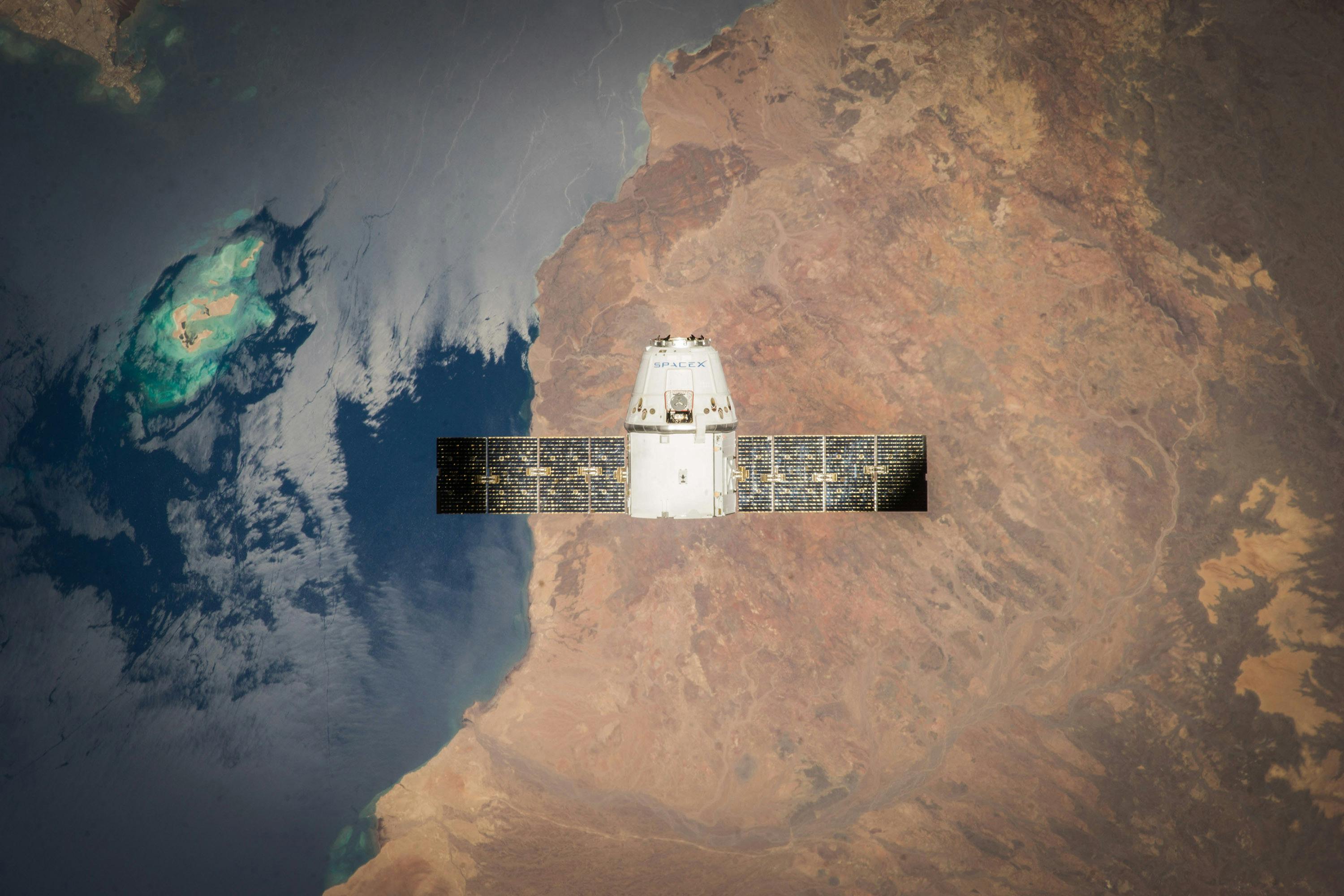
The race for Artificial Intelligence supremacy is fundamentally a race for computational power, and that power is rapidly outstripping the sustainable capacity of planet Earth. As AI models become exponentially larger, the energy and physical constraints of terrestrial data centers have emerged as the single greatest bottleneck to continued progress. In response to this existential challenge for the digital age, Elon Musk has positioned his newly consolidated aerospace and AI powerhouse, the combined entity of SpaceX and xAI, to pivot toward a solution once relegated to science fiction: massive orbital data centers. While the vision of a million AI-powered satellites may sound like hubris, a detailed examination of the underlying engineering principles and economic drivers reveals a calculated strategy addressing systemic terrestrial constraints, making the bold orbital shift a compelling, if profoundly difficult, next step for computation and civilization itself.
Addressing Terrestrial Constraints: The Inherent Advantages of Space-Based Compute
The most compelling argument for the orbital shift rests on circumventing the environmental and logistical burdens imposed by massive ground facilities. Terrestrial data centers are engaged in a constant, unsustainable battle against two critical resource demands: electricity and water. Industry leaders warn that next-generation AI models will require dramatically more energy, with analysts projecting data center power demand could surge by more than 160 percent by 2030. This forces AI firms to place immense strain on global power grids, leading to, for example, a 267 percent increase in electricity prices for consumers near data centers in the last five years.
Eliminating the Global Electricity and Water Crises for AI Operations
By operating in an environment where solar energy is abundant, reliable, and uninterrupted by the day-night cycle or cloud cover, the orbital data centers can effectively “recreate the energy of the Earth’s Sun” in a controlled manner. Satellites operating in orbit can take advantage of near-continuous solar power. Google research suggests orbital solar panels can be eight times more productive than terrestrial installations. This reliance on direct, high-efficiency solar collection drastically reduces, if not eliminates, the external energy supply dependency that currently shackles ground-based AI expansion. Furthermore, proponents argue that space-based systems can achieve up to 10 times the efficiency of ground-based systems, potentially slashing energy costs by 95%.
Concurrently, the vacuum of space provides a superior environment for passive thermal management. On Earth, large data centers consume staggering quantities of water for cooling operations; an average 100-megawatt facility in the US can devour about two million litres of water per day, equivalent to the daily consumption of about 6,500 households. In orbit, the solution is elegant: waste heat can be radiated away efficiently without the need for massive, water-intensive cooling towers or chiller systems drawing 30-40% of facility power. Instead, the design relies on simple radiators pointed away from the Sun, leveraging the vacuum of space as an infinite heat sink through radiative cooling. This effectively resolves the dual sustainability crises inherent in terrestrial hyperscale computing by offloading compute to space and reducing Earth’s ecological footprint.
Achieving Unprecedented Operational Cost-Efficiency Through Solar Harnessing
Beyond mere sustainability, the economic calculation strongly favors the space-based model in the long term. While the initial capital outlay for launching the constellation is immense—with estimates for 100 gigawatts of orbital compute capital expenditure potentially reaching $4 trillion to $5 trillion for the hardware alone—the operating expenses are projected to be radically lower over the lifespan of the infrastructure.
The access to continuous, free energy, coupled with minimal maintenance requirements due to the automated nature of the orbital nodes, translates into what is projected to be the “lowest cost way to generate AI compute” when considering the total cost of ownership over time. Elon Musk has estimated that within two to three years, this cost advantage will materialize. This projected cost leadership could unlock an entirely new tier of AI applications, making formerly prohibitively expensive training runs and inference calculations accessible, thereby accelerating innovation across every sector that utilizes advanced machine learning. The Starcloud project, for instance, projected 10x lower costs than terrestrial options, even factoring in launch expenses.
The Grand Vision: Beyond Terrestrial Computation to Interplanetary Civilization
The ambition of this project extends far beyond serving the immediate needs of today’s digital economy; it is explicitly framed as an essential evolutionary step for the human species. The endeavor is deeply intertwined with the long-term trajectory of humanity beyond its home world.
Ascending the Kardashev Scale Through Unfettered Energy Utilization
The proponents suggest that by mastering the harnessing of solar power on such a massive, distributed scale in orbit, the civilization is making a tangible ascent towards a Type Two rating on the Kardashev scale. This theoretical level of development is defined by the ability to harness the entire energy output of its host star. Musk has suggested that launching a constellation of a million satellites operating as orbital data centers is the “first step towards becoming a Kardashev II-level civilization, one that can harness the Sun’s full power.” This pursuit connects the immediate technological goal of AI scaling with the long-term, aspirational goals of becoming a true multiplanetary or even interstellar species, viewing the orbital data centers as the foundational economic engine that funds these grander pursuits.
Funding the Next Great Leaps: Lunar Bases and Martian Settlement
The revenue and technological capabilities generated by this space-based computational backbone are slated to directly subsidize the realization of more established, long-term exploratory objectives. The creation of a robust orbital data network is envisioned as the financial catalyst that will enable the establishment of self-growing bases on the Moon and, eventually, the construction of a self-sustaining civilization on Mars. The argument posits that the economic surplus generated by having the cheapest, most powerful compute available will provide the necessary capital infusion to overcome the immense logistical and material challenges associated with deep space colonization, effectively making the AI infrastructure a critical enabler for humanity’s expansion into the cosmos.
Skepticism and The Engineering Gauntlet: Hurdles on the Path to Orbit
Despite the robust, long-term rationale, the near-term proposal is met with significant industry scrutiny. The sheer scale of the undertaking, combined with the complexity of operating high-performance computing in the harshness of space, raises immediate questions about feasibility and timeline.
The Critical Scrutiny Regarding Technical Feasibility and Deployment Timelines
A significant contingent of industry analysts and established space experts greets the proposal with healthy skepticism, primarily focusing on the difficulty of execution within Musk’s optimistic two-to-three-year window. Some experts view the rapid scaling required as more akin to a generational mission rather than a near-term corporate deliverable, suggesting that the current pace of development for specialized components is insufficient to meet the projected deployment velocity. Lluc Palerm, a satellite research director, characterized the goal as a “long-term goal,” likening it to a mission to Mars.
Questions are frequently raised about the practicalities of “thermal management”—how to effectively radiate heat in the vacuum of space without massive, unwieldy radiators—and ensuring the long-term reliability and fault tolerance of components subjected to the harsh orbital environment, including radiation exposure. While Google’s Project Suncatcher has shown promise by testing TPUs that survived high radiation doses, and some analysts suggest a highly distributed architecture of smaller nodes could ease cooling burdens compared to a few massive satellites, the engineering challenge remains monumental.
Navigating Orbital Hazards: Space Debris and the Kessler Syndrome Threat
Perhaps the most frequently cited existential threat to such a massive constellation is the management of orbital traffic and the potential for catastrophic collision cascades, commonly known as Kessler Syndrome. Launching a million new objects into an already crowded environment raises serious environmental concerns about increasing the density of space junk. A single impact could trigger a chain reaction rendering key orbital bands unusable for decades.
SpaceX has sought approval from the Federal Communications Commission (FCC) to launch up to one million satellites engineered as orbital data centers, a figure described as a “staggering jump” of about 68 times the satellites currently in orbit as of early 2026. Proponents counter with concepts of “active smart management,” including sophisticated collision avoidance systems and intentional spacing between nodes, often utilizing optical links for communication. However, the sheer volume necessitates an unprecedented level of autonomous traffic control and an absolute guarantee of fail-safe maneuvering capabilities for every single satellite in the network to prevent an environmental disaster in the near-Earth space domain.
Economic Trajectory and Industry Disruption: Valuations and the New Compute Paradigm
The successful execution of this vision, regardless of the final constellation size, is poised to redefine global technology valuations and fundamentally disrupt the cloud computing industry.
The Potential for Unmatched Economic Dominance and IPO Valuation Inflation
The sheer scope of integrating these powerful, revenue-generating assets directly under the aerospace corporate umbrella has profound implications for its financial valuation. The recent merger of SpaceX and xAI, announced in early February 2026, immediately created the world’s most valuable private company, with SpaceX valued at approximately $1 trillion and xAI at $250 billion, totaling an enterprise value of $1.25 trillion. This structure is widely seen as paving the way for a massive public debut.
Analysts suggest that the successful deployment of this infrastructure could underpin an initial public offering of unprecedented scale, with reports suggesting a potential $1.5 trillion valuation for the debut in 2026. This positions the entity to secure the financial firepower required for capital-intensive initiatives. The logic is that by controlling the essential, next-generation infrastructure for artificial intelligence—the sector seeing the most rapid investment—the company secures an enduring, high-margin revenue stream that justifies a massive pre-offering valuation, attracting significant investor capital eager to secure a stake in the foundation of the future digital economy. The combination of SpaceX’s 2025 reported revenue of $15-16 billion and an $8 billion profit provides a strong financial base, though analysts note the orbital project requires “a staggering amount of external financing.”
Transforming the Competitive Landscape for Artificial Intelligence Infrastructure Providers
The successful realization of this plan would instantly create a chasm between this vertically integrated powerhouse and all other potential competitors in the compute space.
If the orbital centers genuinely become the lowest-cost producer of high-end AI processing power, the economic foundation of every existing ground-based cloud provider and dedicated supercomputing center becomes immediately precarious. The immense energy and cooling costs faced by terrestrial hyperscalers like Amazon, Microsoft, and Google—whose combined capital expenditure for infrastructure in 2025 was $0.4 trillion—are the very factors the orbital design seeks to eliminate.
This technology shift threatens to render traditional infrastructure investment models obsolete, forcing established players to either attempt to replicate a similarly complex space-based architecture or pivot to a role as a customer dependent on the new orbital utility. Furthermore, competitors are already laying groundwork: Google is pursuing Project Suncatcher, and Blue Origin has announced the TeraWave constellation, indicating that the concept is already driving architectural shifts across the space/tech industry. This potential for disruptive cost leadership ensures that the development of this celestial network will remain a central and closely watched element in the ongoing technological competition of the mid-twenty-first century.



