






OpenAI’s Pivotal Entry into Advertising: Early Talks with The Trade Desk and the Nascent In-Product Rollout
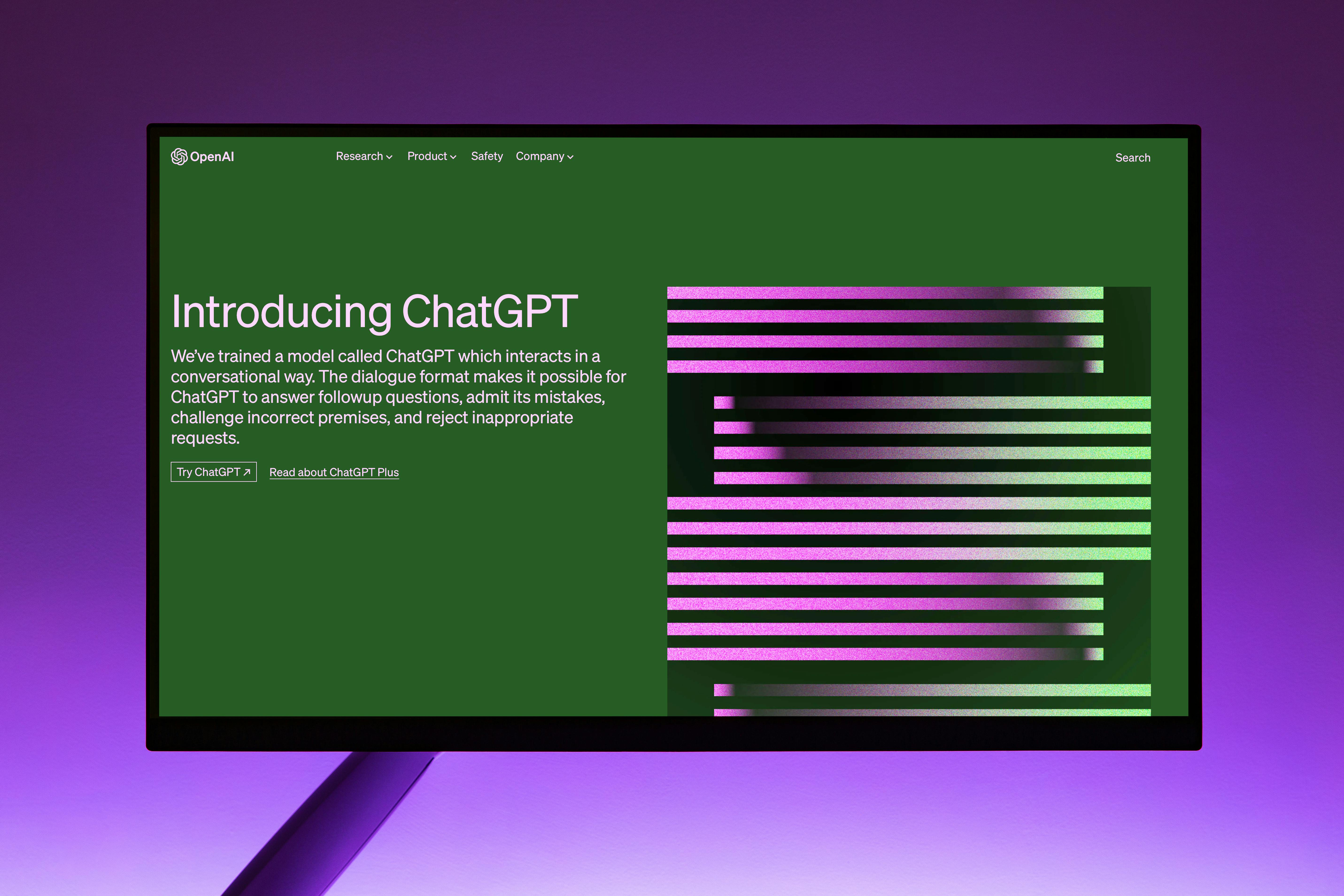
The monetization strategy of the artificial intelligence pioneer, OpenAI, has reached a critical inflection point as the company moves aggressively to fund its staggering infrastructure costs by integrating advertising into its flagship conversational product, ChatGPT. These strategic maneuvers involve a dual-track approach: immediately leveraging external ad-tech expertise for scale while concurrently building proprietary capabilities for long-term independence. The initial public discourse around this pivot has centered on preliminary, high-level discussions with leading demand-side platform (DSP) operator, The Trade Desk, while real-world advertising trials are already underway with a highly controlled segment of the user base.
The Nascent Stage of In-Product Advertising Implementation
The commencement of real-world advertising tests directly within the flagship conversational product signals a tangible and definitive move toward revenue diversification for the AI developer. This transition confirms that the company has moved decisively past the conceptual phase of advertising and firmly into the execution and validation phase for its in-product ad units as of early 2026.
Details of the Initial Advertising Trials Within the Flagship Product
The initial advertising deployment is characterized by a tightly controlled, phased rollout strategy typical of high-stakes technology implementations. The formal announcement of this plan occurred in mid-January 2026, with the live testing commencing in earnest on February 9, 2026.
- Targeted User Segment: The earliest ad impressions are focused exclusively on logged-in adult users accessing the platform through the standard Free tier or the entry-level ChatGPT Go subscription plan within the United States market.
- Tier Exemptions: A clear value proposition for premium users is being maintained; subscription tiers such as Plus ($20/month), Pro ($200/month), Business, Enterprise, and Education remain entirely ad-free.
- User Control Alternative: For users on the completely free tier who wish to avoid commercial messaging, an alternative to upgrading has been provided: the option to opt out of ads in exchange for a reduced number of daily free messages.
- Format and Placement: The initial ad format consists of sponsored placements appearing at the bottom of ChatGPT responses, clearly separated visually and labeled with a bold “Ad” marker. This design adheres to the principle of “answer independence,” meaning the advertisements are structured not to influence the core, objective answers provided by the AI model.
- Future Interaction: While the current deployment is largely static, there is ongoing exploration into developing more interactive formats, including the potential for users to ask follow-up questions directly to the advertiser within the ad experience over time.
- Contextual and Intent-Based Targeting: The primary method for ad matching is contextual relevance, driven by the topic of the current conversation. This is supplemented by analyzing past chat history and previous ad interactions. This strategy deliberately prioritizes intent over deep, longitudinal behavioral profiling, aligning with stated privacy commitments.
- Privacy and Safety Guardrails: Strict parameters govern impression delivery. Ads are explicitly prohibited near sensitive or regulated topics, including conversations involving health, mental state, or politics. Furthermore, the system employs prediction or user-provided data to ensure no ads are served to users under the age of 18.
- Data Use Transparency: A key component of user control is the promise that user conversations are kept private from advertisers, and user data is never sold to third-party brokers. Advertisers reportedly receive only aggregated performance data, such as impressions and clicks, during this initial phase.
- User Agency: Beyond simple non-display, users are equipped with mechanisms for control, including the ability to dismiss ads, provide feedback on relevance, and actively inquire about why a specific ad was displayed.
- Broader Engagement: Reports confirm that the AI developer is simultaneously engaging in exploratory discussions with a diverse array of market participants, including various brands, traditional media agencies, and other advertising technology companies.
- Confirmed Collaborators: The existence of other firms already participating in the early pilot program validates this diversification strategy from the outset. Specifically, OpenAI has announced a partnership with ad-tech firm Criteo to onboard new advertisers onto the platform.
- Strategic Rationale: This multi-faceted engagement strategy is intended to avoid over-reliance on any single vendor for a critical revenue component. It fosters a more competitive sourcing environment for technology services, potentially leading to more favorable commercial terms and allowing the company to benchmark different technological stacks for optimal inventory management and direct brand activation.
- Pressure on Rivals: Rival generative AI developers now face intensified pressure to accelerate their own monetization roadmaps. The market expects a fast-paced race to establish analogous ad inventory standards within the burgeoning conversational interface category. This was highlighted by competitor Anthropic, which aired a commercial during Super Bowl LIX (February 2026) directly criticizing OpenAI’s ad plans just as the ChatGPT test launched.
- Opportunity for Incumbents: For established digital ad-tech providers, securing early foundational partnerships—like the rumored one with The Trade Desk—presents an opportunity to embed their technology into the next generation of digital interaction points, potentially gaining significant market share. The Trade Desk, in particular, may benefit from aligning with OpenAI as it seeks to offer an alternative to the “walled garden” platforms like Google and Meta.
- Competitive Threat to Search: Analysts suggest that the scale and intent-driven nature of ChatGPT’s advertising offering could pose a significant challenge to the core search advertising business of incumbents like Google, as commercial queries may begin to divert from traditional search engine results pages.
- Transitional Partnership: Any agreement with an outside firm, including The Trade Desk, is widely viewed as a temporary measure to facilitate immediate revenue scaling, rather than a permanent outsourcing of core commercial operations.
- Strategic Rationale for In-House Build: Ultimate control over data utilization, ad serving logic, user experience integration, and, most critically, capturing the maximum possible margin from advertising transactions, is best achieved through wholly owned and operated systems.
- Learning Environment: The current pilot program serves as an invaluable, real-world learning environment, allowing internal engineering teams to study industry best practices, understand real-time operational requirements, and inform the development of their future in-house ad technology with concrete performance feedback.
- Funding R&D: By engaging established partners, OpenAI immediately begins monetizing its massive user base, effectively generating the capital required to fund the intensive internal research and development efforts aimed at eventually replacing that outsourced functionality.
- Profit Ceiling: The eventual success of the internal ad technology build-out will directly determine the ceiling on profitability from the consumer segment, as bypassing third-party service fees will substantially improve the bottom line and contribute more significantly toward the company’s ambitious decade-long revenue projections.
- Customization Advantage: The internal development effort allows the company to engineer an advertising system specifically tailored to the unique interaction patterns and data modalities inherent in its artificial intelligence products. This bespoke approach is often anticipated to be superior to retrofitting existing, general-purpose digital advertising technology stacks to fit an AI-native context.
This cautious, measured deployment strategy is designed to gather initial performance data, precisely measure user feedback curves, and stress-test the ad serving technology before any wider, potential global release. The commitment to this phased approach suggests a strong desire to iterate on the user experience, ensuring that the introduction of commercial messages does not erode the massive audience trust that propelled the platform to its current visibility.
Methodologies for User Segmentation and Ad Impression Control
The execution of these early trials reveals a deliberate and sophisticated, albeit nascent, approach to user segmentation, essential for managing the risk profile associated with this novel advertising inventory.
The controlled volume and frequency of these impressions are paramount at this stage, acting as a balancing act between the immediate necessity for revenue capture and the long-term, non-negotiable imperative of user retention and trust. The data gathered from these live deployments will be foundational in defining the scope, pricing models, and technical requirements for any larger partnership agreements necessary for scaling the volume of ads served.
Competitive Dynamics and Partner Ecosystem Considerations
OpenAI’s bold, rapid implementation of advertising, even in partnership with external entities, immediately sets a new, high-velocity standard for rival generative AI developers. Simultaneously, it forces established digital advertising technology providers to reassess their market positioning in the face of a massive, new inventory source entering the fray.
Diversification of External Partnership Strategy Beyond Initial Talks
While the preliminary discussions with The Trade Desk garnered significant market attention, the developer’s broader strategy is clearly leaning toward establishing a multi-partner ecosystem to ensure resiliency and competitive leverage.
For a company with the computational resource demands of OpenAI—which reported an annualized revenue run rate exceeding $20 billion in 2025 against projected infrastructure spending of nearly $1.4 trillion over the next decade—a single point of failure in monetization infrastructure is an unacceptable risk.
Implications for Rival AI Developers and Established Ad-Tech Providers
The competitive environment in both the AI development and digital advertising sectors is being actively reshaped by OpenAI’s monetization choices.
The critical question for the industry remains whether incumbent programmatic players can become indispensable partners, or if OpenAI’s long-term development goals will eventually render initial external scaling partners tangential to their core commercial engine.
Future Evolution and Long-Term Advertising Technology Strategy
The current exploration of external partnerships is strategically framed by OpenAI as a transitional phase, designed to bridge the gap between immediate revenue needs and the ultimate goal of complete technological sovereignty over its commercial infrastructure.
The Commitment to Developing Proprietary In-House Advertising Capabilities Over Time
A crucial tenet underpinning OpenAI’s current commercial dealings is the stated intention to cultivate its own internal, proprietary advertising technology stack over time. This view is consistent with the company’s historical pattern of investing heavily in owning the technology underpinning its core offerings.
The company’s projections for 2030 anticipate more than $280 billion in total revenue, with goals for consumer revenue alone to nearly double to approximately $17 billion in 2026, underscoring the monumental role advertising must eventually play, independent of the high-margin enterprise segment.
Strategic Implications of Building Versus Buying Technology Expertise
The dual-track strategy—leaning on external proficiency for immediate deployment while planning for internal development—represents a calculated business strategy balancing speed of execution against long-term profitability and strategic independence.
This evolutionary path suggests that while partners like The Trade Desk are vital in establishing market norms for advertising within conversational AI interfaces today, their role may be strategically time-limited. The structure showcases a mature understanding of the necessary trade-offs between achieving immediate commercial scale today and securing complete strategic control tomorrow, positioning the organization for sustained commercial dominance in the evolving digital landscape.



