






Starlink: The Tangible Business That Proves the Model
We cannot discuss Starship without anchoring the discussion in the success of its primary customer and revenue generator: Starlink. This constellation is the living, breathing proof that massive, low-cost deployment is achievable, and that a global market exists for the resulting service. Starlink validates the high-cadence operational rhythm and the demand side of the equation.
As of December 12, 2025, the Starlink network has launched 10,698 satellites, with 9,276 currently on orbit and 9,265 confirmed as working. This is not a handful of experimental craft; this is a globally operational utility serving millions.
A Look at Operational Velocity in Late 2025
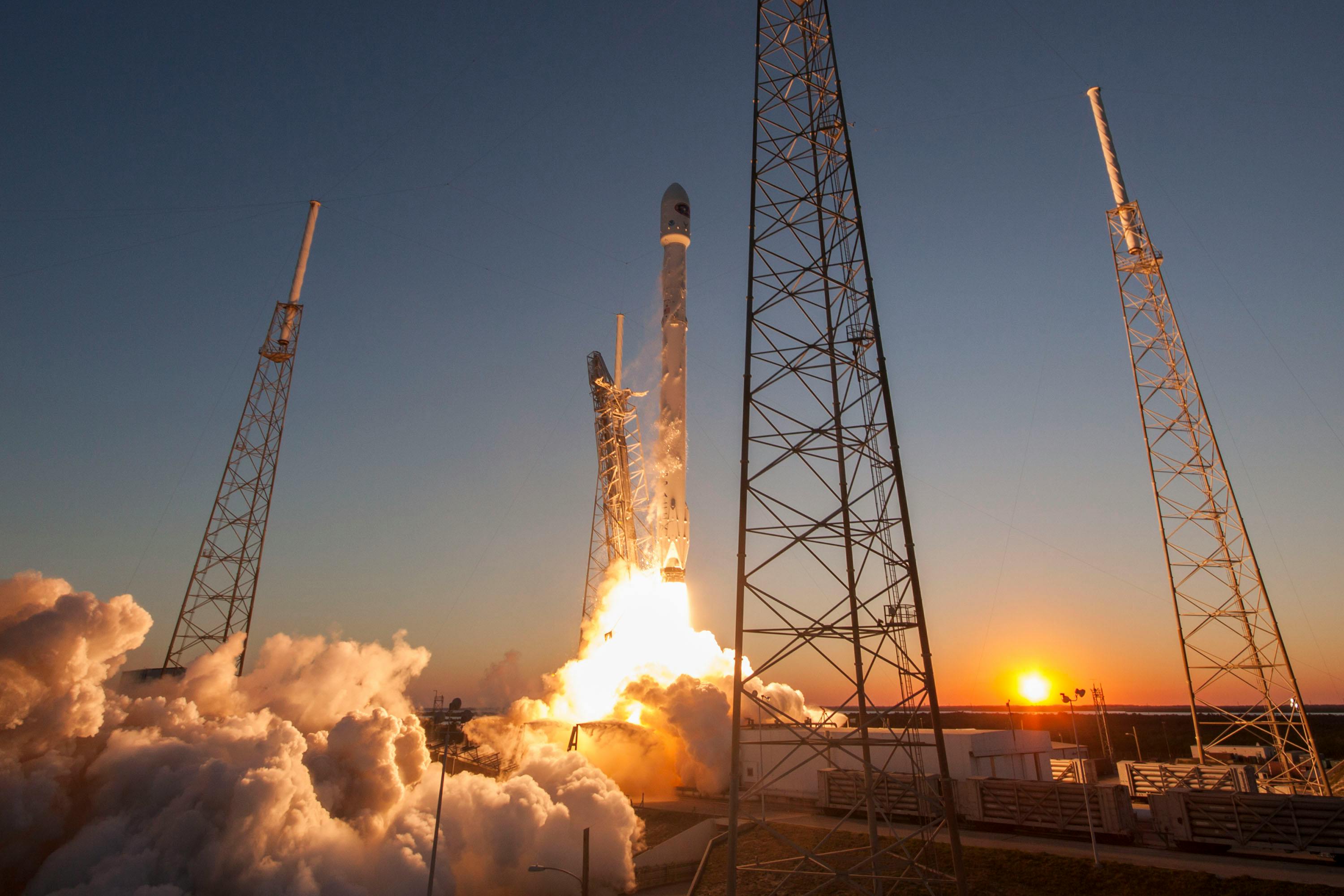
The pace of deployment is itself a testament to the logistical prowess Starship is meant to scale up. In the final stretch of 2025, the company continues to demonstrate incredible operational tempo. Just days ago, a Falcon 9 launch set a new record for the fastest turnaround of a launch pad at Cape Canaveral, an efficiency gain that speaks volumes about the standardized, rapid reuse process that will eventually be applied to the much larger Starship system.. Find out more about SpaceX $800 billion valuation implications for IPO.
The continued deployment of the V2 Mini satellites shows the steady march toward global saturation, but the future lies in the higher-capacity V3s. The plan is to launch 60 of these high-capacity satellites *per Starship flight* starting in 2026. This illustrates the synergistic relationship: Starship is the vehicle needed to rapidly deploy the next generation of satellites that will exponentially increase Starlink’s revenue and market defensibility, securing the cash flow necessary to fund the Martian dream. Understanding the velocity of Starlink scale provides the baseline for all future revenue projections.
Broader Market Implications: The Gravitational Force of the Imminent IPO
The size and timing of the potential public offering—which is now being openly discussed for 2026—is significant enough to act as a gravitational force on the *entire* private space and technology investment landscape. The company’s actions are being watched globally for clues on market receptivity to high-growth, high-Capital Expenditure (CAPEX) space ventures, particularly those with such a long-term horizon.
The Expected Contagion Effect on Competing Aerospace Ventures
If the Initial Public Offering (IPO) proceeds successfully at or near the most ambitious internal valuation targets—rumored to be reaching $1.5 trillion—it is widely expected to trigger a significant cascade effect across the emerging private space industry. For years, many promising companies in the satellite, launch, and adjacent technology sectors have been hesitant to pull the trigger on their own public market entries, waiting for a clear ‘gold standard’ validation.. Find out more about SpaceX $800 billion valuation implications for IPO guide.
A successful, high-profile listing of this magnitude serves as that ultimate validation point. It tells the market: ‘These types of capital-intensive, long-horizon space ventures are not just speculative; they are the future of large-cap growth.’ This success will likely unlock capital for numerous other ambitious projects across the sector, as previously cautious venture capital firms and institutional investors see a clear, liquid exit path. The momentum created by this debut could reshape aerospace investment trends for the entire decade.
The ambition is staggering. Reports suggest the company is targeting a valuation that could rival—or even surpass—the record-breaking 2019 IPO of Saudi Aramco, which raised $29 billion. While Elon Musk has publicly downplayed specific secondary sale valuations, he has confirmed that valuation increments are fundamentally a function of progress with Starship and Starlink, cementing the link between rocket development and market perception.
Investor Pathways to Gaining Indirect Exposure in the Near Term
For the average investor—the person reading this blog post today, December 13, 2025—the private tender offers and secondary markets are largely inaccessible. The impending IPO represents the first true, broad-equity opportunity. Before that official listing, however, exposure has been constrained to niche avenues:. Find out more about SpaceX $800 billion valuation implications for IPO tips.
The eventual public listing promises to democratize access far beyond these niche avenues. It promises unprecedented transparency and liquidity to what is arguably one of the most closely guarded and valuable industrial enterprises of the modern era. This evolution from a singular, founder-driven private venture to a transparently valued public stock is a pivotal moment for both the financial and aerospace worlds in this current year of two-thousand-twenty-five.
The Starship Value Proposition: Risk Versus Reward in 2026. Find out more about SpaceX $800 billion valuation implications for IPO strategies.
The market’s ultimate decision on valuation will hinge on how it weighs the near-term, verifiable success of Starlink against the massive, capital-intensive risk associated with realizing the Starship vision—especially Mars. It’s the classic high-risk, high-reward equation amplified by the scale of the ambition.
Quantifying the Risk: The Mars Multiplier
Some analysts express concern that Musk’s unwavering focus on Mars—a venture that requires continuous, massive capital deployment—could be perceived as a risk factor in an IPO prospectus, potentially dampening investor appetite compared to a more purely commercial focus. Investors must assess whether the company can effectively ring-fence the operational cash flows from Starlink to fund the later, more speculative stages of the Mars effort without constantly demanding equity dilution from the public offering.
This is where the concept of orbital data center economics becomes a vital bridge. If the company can prove that Starship enables a *profitable* new business line (like orbital compute) *before* the Mars missions get underway, it de-risks the entire structure significantly. It shows the market that Starship is not just a means to an end (Mars), but a means to a steady, massive profit stream (LEO services).
Practical Tip: What to Watch for Before the 2026 Listing. Find out more about SpaceX $800 billion valuation implications for IPO overview.
As we move into the next year, the informed investor should track three specific, concrete milestones that will directly influence the offering price:
Conclusion: Betting on Infrastructure, Not Just Velocity
The story of the Starship program in late 2025 is one of convergence. The revenue machine of Starlink is running at a blistering pace, breaking launch records weekly and expanding globally, proving the market demand for high-speed connectivity. Simultaneously, the heavy-lift titan, Starship, is overcoming its inevitable developmental hurdles, with a major push toward the next-generation vehicle planned for early 2026.
The transformative potential isn’t about incremental improvement; it’s about achieving a multi-thousand-fold reduction in the cost to access space, which fundamentally enables not just the completion of the Starlink constellation, but the creation of entirely new trillion-dollar orbital industries, from data centers to deep space exploration. The impending IPO is the mechanism by which this entire, integrated ecosystem will be priced for the world.
Key Takeaways for Today (December 13, 2025):
What are you watching most closely over the next six months—the technical milestones of the Starship V3, or the market’s reaction to the expected 2026 offering? Let us know your thoughts in the comments below on whether the Mars ambition is a necessary risk or a dangerous distraction for the launch business.



