





Divergent Paths to Profitability: The Business Model Showdown
The public sparring, while entertaining, was ultimately a sophisticated proxy for a fundamental, trillion-dollar disagreement regarding the most sustainable and ethically sound method for funding the massive operational costs associated with state-of-the-art artificial intelligence development. The capital intensity of frontier model training is unlike anything seen since the early days of fiber-optic networks—it requires gargantuan, immediate investment to secure a long-term lead.
OpenAI’s Strategy: Mass Adoption Through Ad-Supported Free Access
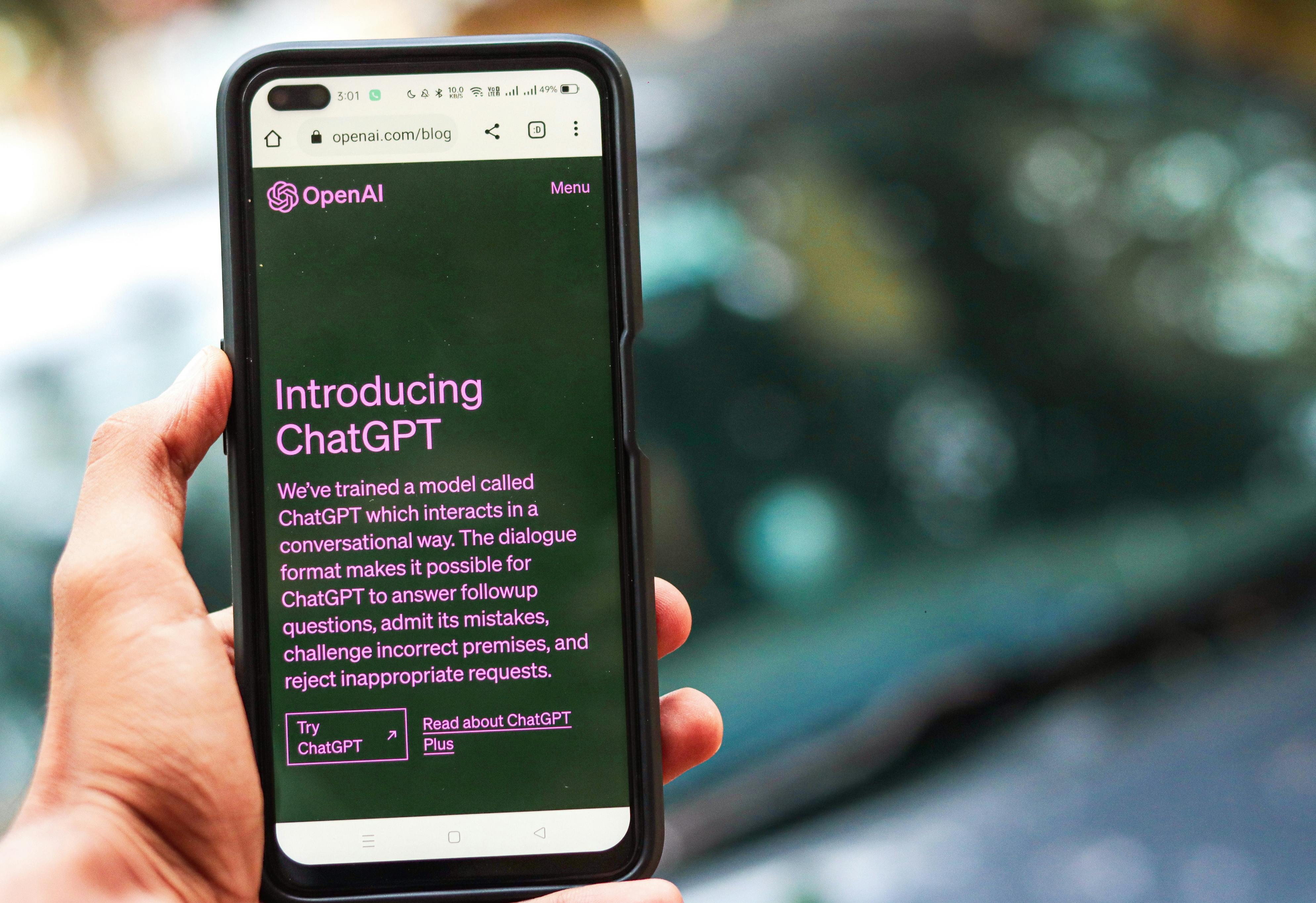
OpenAI’s strategy, as articulated by Altman, pivoted on achieving unprecedented scale. The goal is to deploy their technology to “billions of people who can’t pay for subscriptions.” The introduction of advertisements, even in basic tiers like the free and low-cost ChatGPT Go tiers, was presented as the essential, non-negotiable bridge to monetize this massive, non-paying user base. This model sacrifices near-term, pure-margin profitability for massive market penetration. It mirrors the early architecture of the commercial web—build the platform for everyone, secure the user base, and then build the attention-based monetization stack on top of it. This approach aims to ensure that no one is priced out of using the most capable general-purpose AI. For context, by the end of 2025, OpenAI generated around $20 billion in revenue, but this still wasn’t enough to cover their borrowing and projected spending.
Anthropic’s Model: Premium Offerings and Enterprise Focus
Conversely, Anthropic maintained a more traditional, yet highly lucrative, approach focused on securing high-value, long-term commercial contracts. Their revenue structure heavily relied on premium subscription tiers for individual power users and direct, substantial business-to-business service agreements. They positioned Claude as a sophisticated, premium tool designed specifically for enterprise transformation, where the AI’s capability translates directly into measurable productivity gains, justifying a higher price point. This focus allows them to bypass the perceived ethical and user-experience compromises of advertising altogether. Anthropic reported a staggering $9 billion in revenue in 2025 and is projecting $26 billion for 2026, a testament to the power of their high-value customer capture. For them, the business model is a classic defensive strategy, differentiating on what the incumbent cannot afford to offer: an ad-free commitment, a move designed to capture the margin-rich enterprise segment.
The Debate Over Future Revenue Diversification and Market Strategy
The Super Bowl skirmish effectively forced this high-level strategic disagreement into the public sphere for immediate consumer judgment, but the real battle is for the C-suite and the sophisticated developer community. The tension highlights a key fork in the road for general-purpose AI:. Find out more about Anthropic OpenAI Super Bowl ad user boost.
- The Platform Model (OpenAI): Subsidized by advertising revenue, akin to the early days of the commercial web, prioritizing breadth over immediate per-user profit. This relies on network effects and massive scale to eventually justify valuations.
- The Enterprise Software Model (Anthropic): Sustained by direct, high-value subscription and API fees, resembling traditional enterprise software sales, prioritizing margin and trust integrity.
- If your value proposition is Accessibility: You *must* find a way to offset compute costs for free users. Advertising is the fastest way, but you must preemptively build airtight guidelines to ring-fence your core utility from commercial intrusion.
- If your value proposition is Trust/Purity: You *must* target customers who receive immediate, measurable ROI from your service. Your sales cycle will be longer, but your customer lifetime value (CLV) should be exponentially higher and more stable. Look into enterprise sales strategy deep-dive for how to execute this.
- Vision A (The Utility Model): Mirrors the ad-supported content model of the broader internet. It’s “free,” but the user pays with their attention and data exposure. The trade-off is accepted as the price for wide access.
- Vision B (The Pure Assistance Model): Insists on a premium, distraction-free zone reserved for pure utility and thoughtful assistance. This demands a direct financial contribution from the user or enterprise.
- Define Your Tolerance: Decide where you draw the line. Is a subtle, labeled banner below an answer acceptable (OpenAI’s position)? Or is any commercial intrusion a deal-breaker, demanding a subscription payment (Anthropic’s position)?
- Scrutinize the Fine Print: Don’t just trust the CEO’s tweet. Look for the official advertising guidelines. Are they binding commitments or simply “testing principles”? The devil is always in the legal document.
- Factor in Cost of Entry: Recognize that “free” AI costs *someone* massive amounts of compute. If you aren’t paying with money, you are paying with attention, or your data profile is being built for future monetization.
- Trust is the New Moat: Anthropic proved that positioning an AI experience as an uncompromised, private zone has strong resonance, even if it means charging a premium.
- Scale Demands Monetization: OpenAI’s argument remains powerful: to bring this revolutionary technology to “billions,” you eventually need the massive revenue flywheel that advertising—even imperfectly deployed—provides.
- The Enterprise Still Rules: Beneath the consumer noise, the stability and massive recurring revenue from B2B contracts will continue to be the bedrock for both companies, regardless of their consumer-facing ads policy.
This isn’t a new dynamic—we see echoes of it in the streaming wars, where services like Netflix and Spotify have long wrestled with balancing ad-supported tiers against premium subscriptions. For those interested in how this monetization split has played out in media, an analysis of media monetization strategies offers interesting parallels.
Practical Tip: Choosing Your Monetization Axis
If you’re scaling any technology service, use this AI feud as a case study in monetization strategy. Ask yourself:
Broader Market Resonance and the Capital-Intensive Landscape
The drama unfolded within a hyper-competitive ecosystem where multiple major technology entities were simultaneously vying for dominance and investor confidence. Every minute of attention is crucial, and every dollar spent on advertising represents a massive financial commitment in a market defined by intense, capital-intensive development.
The Broader AI Advertising Presence Beyond the Feud
It is important to note that the rivalry between OpenAI and Anthropic was merely the loudest event in a wider trend. Multiple artificial intelligence brands utilized the major game to pitch their respective platforms to the vast viewership. This collective spending, where 30-second spots reportedly cost upwards of $8 million, underscored the intense, capital-intensive nature of the frontier-model development race. Every percentage point of market share is fiercely contested, and visibility on that stage is a mandatory cost of entry for consumer-facing AI. For those tracking the broader investment thesis in this space, the sheer marketing spend signals that investors are looking for category kings, not niche players. You can see how this massive spend reflects the broader trends in tech investing trends that prioritize market share.
The Shadow of Enterprise Adoption: Where the Real Money Resides
Beneath the consumer-facing advertising war, the more significant, underpinning competition was focused on securing major corporate clients. Both developers were actively competing to be the “partner of choice for AI transformation” within large enterprises. Securing these business contracts—through API access, private instances, or custom enterprise deployment—represents the most stable and largest sources of recurring revenue, a necessity when compute costs are surging. Reports suggested OpenAI faced an expected cash burn of $17 billion in 2026, up from $9 billion the year prior. Success in the consumer market, as demonstrated by the user boost, often serves as a strong leading indicator for enterprise adoption; the C-suite wants to see which consumer tool has “stickiness” before committing large-scale infrastructure deals.
The Impact on Other Key AI Platforms. Find out more about Anthropic OpenAI Super Bowl ad user boost tips.
While the primary narrative focused on the two principals, the advertising efforts of other competitors also registered shifts in user metrics. The presence of other key industry players—perhaps even Google or Meta, who also advertised their AI efforts that night—in the ad buying pool meant that the entire sector experienced an elevated level of public awareness. This overall market excitement fueled continued investor interest across the entire field, validating the general thesis that AI is moving from the research lab to the living room. The market reaction, measured by social volume, showed that Anthropic’s campaign, despite its focus on a niche debate, generated high penetration relative to its size, but OpenAI’s broader narrative of accessibility still dominated overall mentions.
Case Study in Scale: Consider the sheer difference in scale. Altman’s critique about access boils down to this: OpenAI’s free user base is so large that even low-yield ad revenue is a massive top-line number, whereas Anthropic’s smaller, premium user base requires a much higher price-per-user to maintain its runway. This highlights the enduring challenge of scaling infrastructure cost-effectively.
Implications for Consumer Trust and the Future of Interaction
Beyond the immediate business metrics and the stock price implications, the public confrontation sparked a vital, ongoing conversation about the ethical boundaries of human-computer interaction and the perceived sanctity of conversational interfaces. This is where the philosophical rift becomes a material risk.
Erosion of Trust in Personalized Digital Services: The ‘Unnatural’ Interruption
The central argument leveraged by Anthropic was the potential for the introduction of commercial messaging to fundamentally degrade user trust. When a digital assistant, which many users treat as a sophisticated personalized tool—a sounding board, a tutor, a pseudo-therapist—begins prioritizing third-party promotions, the perceived utility and sincerity of the entire platform can be jeopardized. Experts widely cautioned that ads within a chatbot’s dialogue stream risk creating an environment of perpetual suspicion regarding the nature of the response. Are you getting the best answer, or the answer that pays the most commission? The satire in the ads—the stilted, “unnaturally effusive” acting personas—tapped into this existing fear that AI is becoming manipulative for financial gain.
Defining the Future User Experience Covenant in AI. Find out more about Anthropic OpenAI Super Bowl ad user boost strategies.
The Super Bowl skirmish effectively highlighted the diverging visions for the user experience covenant in the age of ubiquitous generative AI.
The market’s reaction, in terms of post-ad user adoption metrics, offered an early, if incomplete, verdict on which covenant was presently more appealing to the mass market. The fact that Anthropic’s campaign generated a disproportionately deep *penetration* relative to its brand size suggests the message resonated strongly with the segment sensitive to privacy, even if OpenAI’s broader appeal captured more raw volume.
The Question of Data Integrity and Privacy Posture
The debate also drew immediate, unwanted attention to the underlying privacy postures of the two organizations. Anthropic explicitly linked its ad-free pledge to a commitment against selling users’ attention or data to third-party marketers, positioning itself as the clear choice for the privacy-conscious user. This forced OpenAI to publicly defend its own data handling protocols and its commitment to user anonymity even within an ad-supported framework, specifically promising that conversations would not be accessible to advertisers. This entire episode is a masterclass in how a competitor can weaponize transparency and ethical positioning against a revenue-driven pivot. If you are worried about how your data is handled, you must look into the privacy framework of your chosen provider, comparing AI data privacy policies across the board.
Your Personal Action Plan for Digital Trust:. Find out more about Anthropic OpenAI Super Bowl ad user boost overview.
How do you navigate this new environment? It’s simpler than you think:
Financial Undercurrents: Pre-IPO Maneuvering and Capital Intensity
The entire public display was shadowed by the massive financial realities of operating at the cutting edge of artificial intelligence development, where expenditures vastly outpace immediate revenue generation. This public mud-slinging is often a highly strategic maneuver timed to influence investor sentiment ahead of major financial milestones.
The Burden of Compute Costs and Capital Obligations. Find out more about AI business model comparison ad-free versus ad-supported definition guide.
A critical, often understated, element driving the need for immediate monetization for OpenAI was the sheer financial weight of the underlying infrastructure. Reports indicated that the incumbent carried significant financial obligations, which, by some accounts, involved servicing borrowed capital exceeding one trillion owed to major technology backers, essentially representing massive pre-financing of future potential. Sustaining operations and meeting these obligations requires aggressive and immediate revenue streams, such as the newly tested advertising model. This high-burn rate puts enormous pressure on achieving scale quickly, which is why the ad-supported tier—even if ethically thorny—is seen by some analysts as a mandatory step for a company with such immense capital needs to satisfy its backers.
Valuation Milestones and Funding Rounds as Strategic Timing
The timing of the dispute was not accidental. It coincided with Anthropic reaching a significant valuation milestone. The recent completion of a substantial funding round, placing its enterprise valuation in the hundreds of billions, demonstrated that investor appetite for the challenger remained robust. However, high valuations are double-edged swords; they signal incredible potential but also signal the need to show aggressive growth metrics that justify such high figures heading into potential public market debuts. This dispute gave Anthropic a clear narrative to justify its high valuation: we command a premium because we prioritize the sanctity that other platforms cannot afford to protect. The fight was, in part, a performance for the private markets.
The Investor Focus: Scale, Differentiation, and the Eventual Payoff
Analysts noted that, despite the heavy financial losses sustained by both entities—OpenAI’s burn rate eclipsing Anthropic’s—the immediate focus for investors remained fixed on scale, differentiation, and leveraging infrastructural advantages rather than achieving swift profitability. The user boost experienced by Anthropic following their ad campaign, while perhaps less direct than their enterprise contracts, was a critical data point. It proved that their narrative of differentiation—the “ad-free space to think”—was successfully translating into the real-world scale and mindshare that placates the heavy financial backers waiting for the eventual payoff of the race for AI supremacy.
For a deeper understanding of how these funding dynamics play out, studying the history of hyper-growth companies is essential, particularly the interplay between venture capital and the race for market dominance—a topic covered in detail in our guide on startup capital strategy.
Conclusion: The Verdict and Your Next Move. Find out more about OpenAI CEO accusations about Anthropic dishonesty insights information.
The executive exchange over the Super Bowl ads was more than just corporate mud-slinging; it was the defining moment where the two dominant philosophies for funding the AI revolution—Scale via Attention vs. Margin via Sanctity—were put on trial before the court of public opinion. As of today, February 14, 2026, the debate rages on, and neither model has definitively won, though the market has clearly responded to the framing of each.
Key Takeaways That Matter Right Now:
Final Actionable Insight: Don’t wait for the next Super Bowl to decide where you stand. Decide today which covenant you want to sign with the AI powering your work and your life. Do you value the lowest possible cost of entry, or the highest possible guarantee of purity?
What’s Your Take? Do you see AI assistants as a utility that must be ad-supported for mass access, or a personal tool that requires a paid, ad-free sanctuary? Let us know in the comments below—we need to hear from the users who will ultimately fund the next generation of these models.



