






ChatGPT Forecasts Intel’s 60-Day Trajectory: Balancing Technical Headwinds with AI Foundry Tailwinds
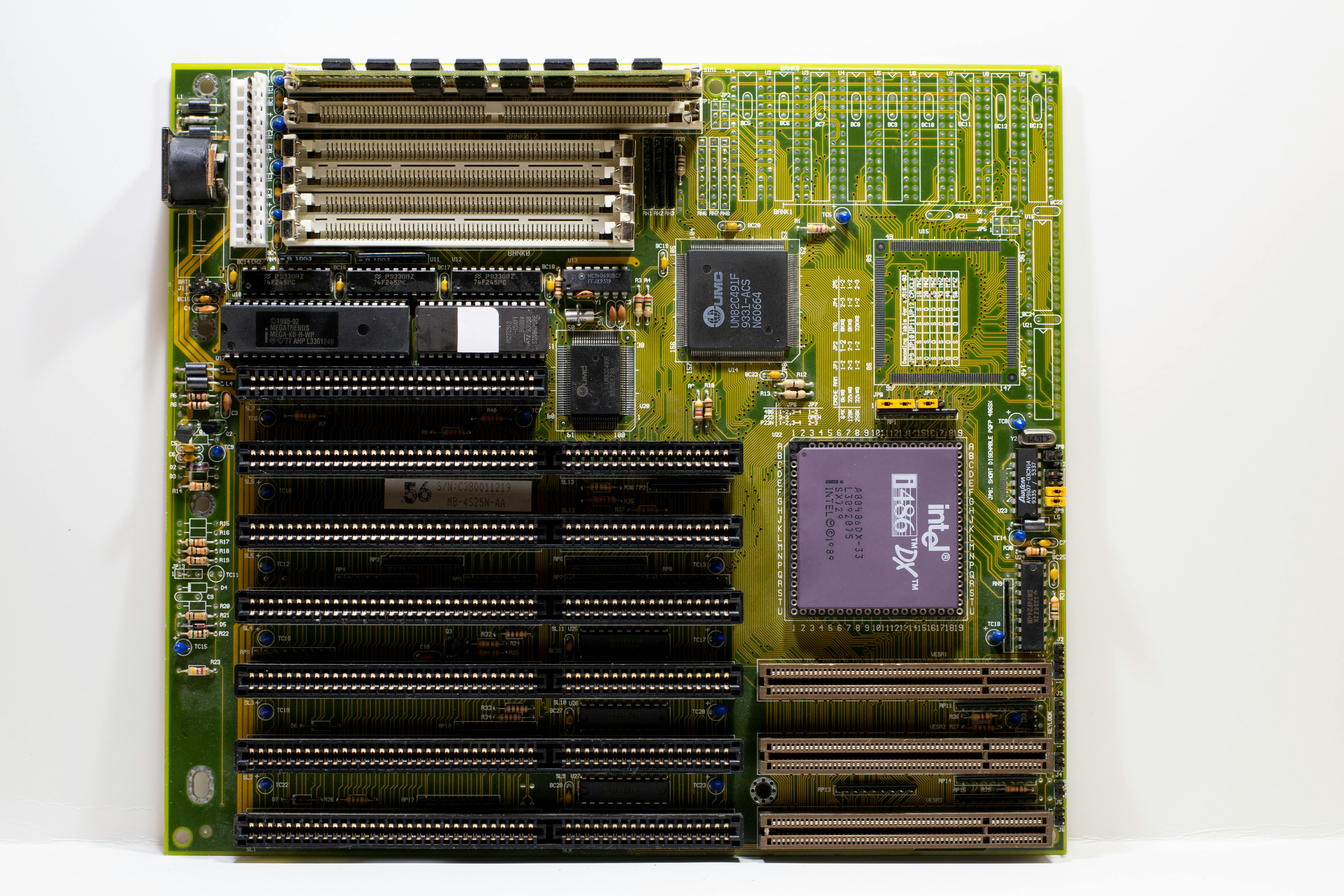
The intersection of artificial intelligence-driven market forecasting and the intensely competitive semiconductor landscape has rarely been more evident than in the recent analysis surrounding Intel Corporation (INTC). As of January 23, 2026, a generative AI model, leveraging OpenAI’s GPT architecture, produced a specific 60-day price projection for Intel stock, aiming to capture the immediate market sentiment following the company’s significant Q4 2025 financial disclosures. This projection, which reportedly signaled an Implied Move of +7.83%, arrived against a backdrop of extreme technical caution and robust, yet challenged, foundational business transformation.
The analysis from the generative model served as a critical barometer, not for Intel’s long-term viability—which remains tethered to its foundry ambitions—but for the short-term technical digestion period following a year of substantial price appreciation. The stock, trading near the low \$50s as of January 21, 2026, is currently navigating the market’s complex reaction to both operational wins and cautious forward guidance.
Technical Indicators and Momentum Analysis: Short-Term Signals and Caveats
In-Depth Look at the Movement Average Crossover Signals
The sixty-day forecast generated by the generative model incorporated a rigorous analysis of technical momentum, utilizing standard tools to gauge the immediate sentiment embedded in the stock’s trading pattern. A key finding flagged within the model’s Signal Snapshot concerned the Moving Average Convergence Divergence (MACD) indicator. Specifically, the report noted that the MACD line was observed to be dropping sharply. This technical signal is universally interpreted by traders as a significant warning sign of waning short-term buying pressure. When the MACD accelerates downward, it suggests that the recent upward velocity of the stock price is decelerating rapidly, often preceding a price consolidation or a minor pullback as short-term momentum traders begin to take profits. This sharp decline in a key momentum oscillator acts as a brake on any overly aggressive bullish prediction, compelling the final base-case price target to remain in a more modest, single-digit percentage gain territory, despite strong fundamental tailwinds. The analysis implicitly argues that while the long-term story is intact, the immediate technical structure suggests a period of hesitation or retracement is imminent before any further significant upward movement can be sustained.
Interpretation of the Relative Strength Index Declines
In addition to the MACD warning, the technical scan also identified a concurrent negative trend in the Relative Strength Index (RSI). The report explicitly mentioned that the RSI was declining. The RSI is a measure of the speed and change of price movements, used to identify overbought or oversold conditions. A declining RSI, especially when accompanied by a sharp MACD drop following a period of significant price appreciation, reinforces the notion of waning short-term momentum. This dual technical warning suggests that the stock may have temporarily overshot its immediate equilibrium point, making it technically “overbought” and susceptible to selling pressure from traders using technical entry and exit criteria. The model is essentially signaling that the technical landscape is currently signaling caution. This confluence of technical warnings is a primary reason why the AI’s predicted Implied Move (+7.83%) remains tempered, suggesting the market will need time to digest recent gains and establish a new technical base before attempting to challenge higher price levels with conviction. The model acknowledges that even strong fundamentals require favorable technical timing to translate into immediate, linear price appreciation.
The Competitive Ecosystem: Positioning Within the Global Chip Landscape
The Foundational Role of Artificial Intelligence Compute Demand
The entire valuation story for every major semiconductor firm in the current era is inextricably linked to the exponential and seemingly insatiable global demand for Artificial Intelligence compute power. This fundamental driver dictates the pricing power and order backlog for nearly every product segment, from high-end accelerators to the underlying manufacturing equipment and foundry services. For Intel, its success in capturing a meaningful share of the server central processing unit market, driven by AI-related workloads, directly translates into revenue growth and justifies the immense capital expenditure required for its manufacturing roadmap. Reports confirming strong performance in its Data Center and AI (DCAI) segment, which posted a 9% year-over-year increase to \$4.7 billion in Q4 2025, directly quantify the impact of this foundational demand trend on its immediate financial health. This macroeconomic tailwind is the primary force pushing the stock price upward, overriding some of the historical skepticism regarding its execution capabilities. Any successful navigation of the AI buildout cycle fundamentally re-rates the company’s long-term earnings potential, making it a key battleground stock in the ongoing technological race.
The Ongoing Dynamics with Key Competitors in High-Performance Computing
No analysis of this company can occur in a vacuum; its performance is measured relative to its established and ascending rivals, primarily Nvidia in the acceleration space and Taiwan Semiconductor Manufacturing Company (TSMC) in the pure-play foundry market. The narrative must constantly address the competitive dynamic. While Intel is aggressively pursuing foundry contracts, Nvidia continues to dominate the high-margin AI accelerator market, setting the benchmark for growth and profitability in the sector. Simultaneously, the primary competitor in the foundry space is often cited as having supply chain constraints, which paradoxically creates an opportunity for Intel to secure crucial outsourcing business, as evidenced by intelligence suggesting Apple may leverage Intel Foundry for chips beginning in 2027. The AI model’s assessment implicitly weighs the potential for these competitors to maintain or erode market share. If competitors falter due to internal capacity limits, such as oversubscribed advanced packaging (CoWoS) supply, Intel stands to benefit disproportionately, as reflected in the more aggressive bullish price targets. Conversely, a strong offensive move by a rival could quickly deflate the positive momentum suggested by the current technical indicators and foundry wins. This constant tension between market leadership and competitive threat creates the complex volatility that necessitates the use of advanced prediction models in the first place.
Longer-Term Implications and Strategic Developments for the Technology Sector
Scrutiny of Post-Earnings Sentiment and Market Reactions
While the sixty-day forecast focuses on the immediate future, its validity is tested by the market’s reaction to the company’s most recently released financial disclosures, specifically the fourth quarter of two-thousand twenty-five earnings report. The context surrounding this report is crucial, as it is meant to demonstrate the initial success of the turnaround strategy under new executive leadership. Intel reported Q4 2025 revenue of \$13.7 billion and adjusted EPS of \$0.15, comfortably beating consensus estimates. However, the market’s reaction was to sell off shares as much as 13.4% in after-hours trading on January 22, 2026, driven by a soft Q1 2026 forecast of \$11.7 billion to \$12.7 billion in revenue. Analysts and models alike scrutinize the reported Earnings Per Share (EPS) figures, gross margin performance, and forward guidance against prior expectations. The data suggests that an accompanying analysis noted an extremely high Price-to-Earnings ratio, reaching over 5,000, which, when based on negative or minimal trailing EPS (full-year 2025 GAAP EPS was $\$(0.06)$), renders the metric largely meaningless for valuation but indicative of extreme market expectation regarding future profitability. The market’s patience for operational missteps is thin; thus, the post-earnings trading session sets the tone for the next few months.
The Significance of Process Yield Rates on Future Profitability
The ultimate long-term determinant of this company’s financial fate, far outweighing short-term price fluctuations, is its sustained ability to master and scale advanced process technology, measured most effectively by process yield rates. The over sixty percent (60%) yield rate reported for the one-eight-A (18A) node is more than just a technical metric; it is the gateway to long-term profitability and competitive viability. A high yield means that a greater proportion of manufactured silicon dies on each wafer are functional and meet specification, directly reducing the cost of goods sold and significantly improving gross margins on every chip shipped. If yields can be further optimized towards industry-leading levels—KeyBanc Capital Markets estimates climbs to 65–75% by 2026—the resulting margin expansion could dramatically surpass current analyst expectations, potentially rendering even the long-term \$60 price target conservative. Conversely, any regression in yield rates would instantly erode confidence in the foundry business model, increase per-unit costs, and likely trigger a significant downward revision across all long-term price targets, including the one-year consensus of \$38.31. Therefore, sustained, incremental improvement in these manufacturing metrics remains the most important ongoing element of this evolving story, providing the fundamental underpinning for any near-term price movement predicted by an AI system.
Conclusion: Synthesizing AI Insights with Enduring Fundamentals
The Convergence Point of Digital Forecasting and Traditional Analysis
This entire episode—the generation of a specific sixty-day price target by a generative AI model and its subsequent analysis across media platforms—serves as a vital marker for the future of financial information. The convergence point lies in how the market chooses to weigh the synthetic, pattern-recognition capabilities of machine learning against the fundamental, on-the-ground validation provided by traditional analyst reports and verifiable corporate execution milestones. The AI provided a near-term spark with its implied modest gain, but this spark gained credence only because it aligned directionally with the bullish outlook on server CPU sales and the potential Apple foundry contract mentioned in more traditional research. The story is not about replacing human analysts; it is about augmenting the speed and breadth of analysis, forcing the entire ecosystem to react faster to synthesized information. The evolving nature of the coverage itself—the constant revisiting of the initial prediction against real-time trading action—is a testament to this new, dynamic relationship between technology and finance.
Navigating Volatility Through Comprehensive Data Integration
Ultimately, the key takeaway for observers following this developing story is the necessity of integrating all available data streams to navigate the high volatility currently characterizing the semiconductor sector. The existence of forecasts predicting both a short-term tempered optimism (the AI’s implied single-digit move) and a significant downward pressure (as seen in the post-earnings sell-off) underscores the sharp division in market perception regarding the company’s ability to complete its strategic transformation. Investors must look past the headline number—be it the AI’s near-term projection or the \$65 street-high target cited by some analysts—and focus instead on the underlying drivers: the continued successful ramp of the 18A process, the securing of the next major foundry customer, and the ability to maintain price discipline against intense competitive pressures. The ongoing media coverage confirms that this particular corporate turnaround remains one of the most compelling and closely watched narratives in the technology sphere for two-thousand twenty-five and beyond, ensuring continued interest in any new data, whether generated by a human or an advanced algorithm.



