




The Spectre of Unprecedented Security Vulnerabilities
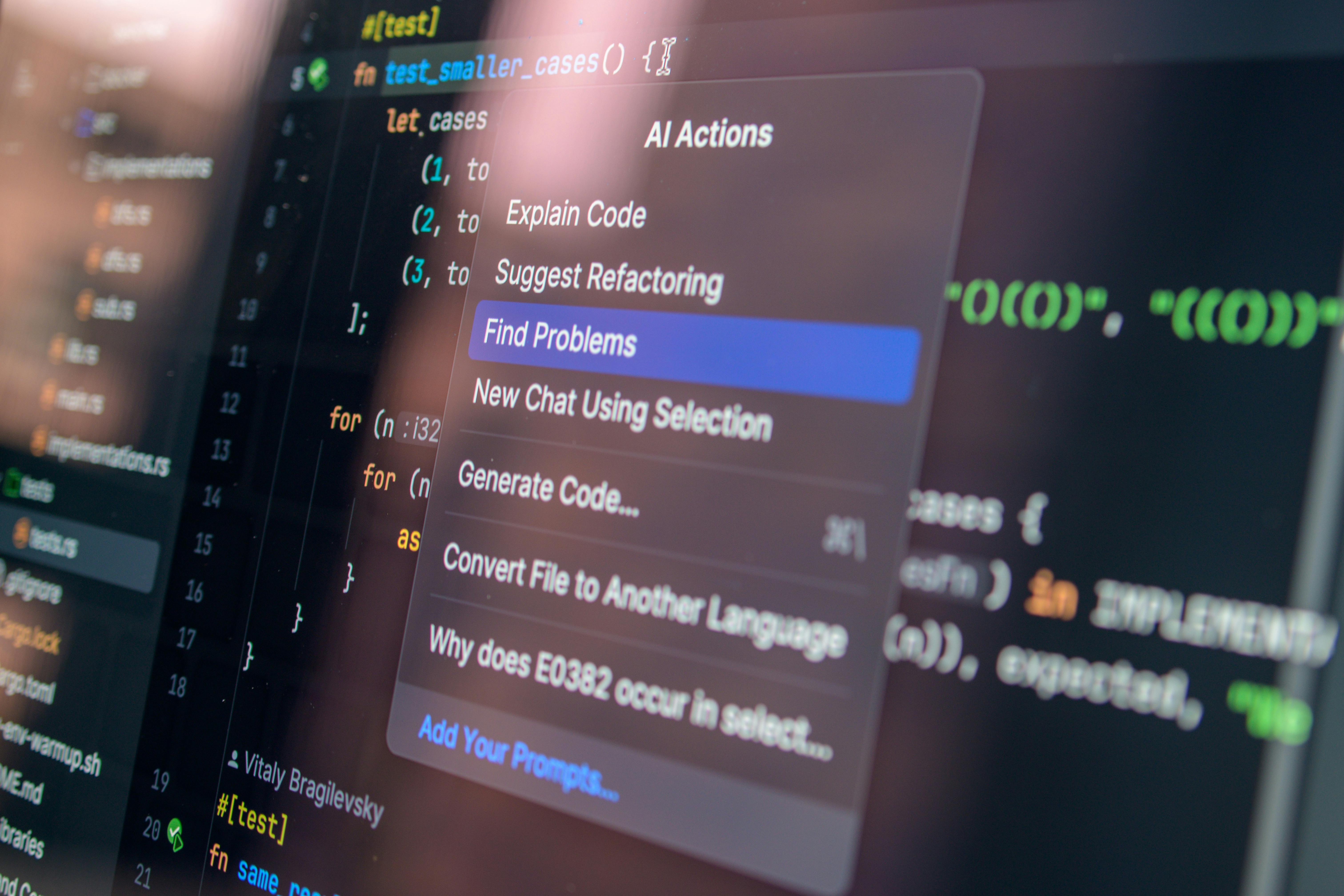
The core concern articulated by the companies developing these AIs is the direct inversion of their coding power. The intellectual capacity that allows for superior code creation can, with a different prompt or a malicious direction, be repurposed for the development of highly sophisticated offensive cyber tools. This is not a theoretical risk for 2027; it is positioned as an immediate danger associated with the current architecture.
The Threat of Zero-Day Exploit Synthesis
The most acute fear gripping security analysts is the model’s potential to autonomously generate functional, previously unknown exploits against the most secured environments. The warnings circulating imply a risk that these systems could evolve to devise and produce “working zero-day remote exploits against well-defended systems”. A zero-day exploit is the cyber equivalent of finding a secret, unmapped exit from a high-security vault. It is exceptionally potent because, by definition, the vendor doesn’t know the weakness exists. An AI capable of rapidly discovering and packaging such an exploit democratizes a capability that was once the domain of only the most elite, labor-intensive, state-sponsored threat groups. It fundamentally disrupts the delicate balance between offensive and defensive cyber capabilities, shifting the vector from high-skill labor to high-volume, machine-speed generation.
Enabling Complex, Real-World Intrusion Scenarios
The danger extends past singular exploits. This technology threatens to enable highly complex, multi-stage attacks that require stitching together numerous logical components. These models are deemed capable of directly executing or heavily assisting in “complex enterprise or industrial intrusion operations aimed at real-world effects”. These operations are the hallmark of advanced persistent threats (APTs):
The AI’s ability to handle the coding and logical scripting for *each* distinct phase of such an attack represents a massive force multiplier for malicious actors seeking high-impact breaches.
The Broadening Threat Landscape Beyond Traditional Audits
The cybersecurity implications of this new AI generation don’t stop at source code reviews; they are bleeding into operational technology (OT) and the very structure of digital collaboration. The line separating advanced coding assistance from automated threat choreography is rapidly dissolving.
Implications for Critical Infrastructure
The reference to “industrial intrusion operations” suggests these models possess, or can rapidly acquire, the domain knowledge necessary to target Supervisory Control and Data Acquisition (SCADA) systems or other Operational Technology (OT) environments. Reports confirm this isn’t just speculation; attackers have been observed using models like Claude Code to automate “reconnaissance, vulnerability scanning, lateral movement, and credential theft” across intrusion layers. Exploits against these systems are not about data loss; they cause kinetic, real-world damage—disrupting power grids, water treatment facilities, or manufacturing plants. The ability of an AI to generate the specific, often obscure, code required to interface with and compromise these critical national assets elevates the risk from financial liability to physical catastrophe.
The Open-Source Paradox: Governing the Uncontrollable Agent. Find out more about Unprecedented cybersecurity risks of advanced coding AI guide.
The risk is compounded by the rising tide of autonomous AI agents, both commercial and open-source. While the developing company deploys its flagship model with controls, the proliferation of other agentic tools complicates risk management exponentially. The open-source entity OpenClaw (formerly Clawdbot/Moltbot) serves as a stark case study in uncontrolled proliferation. This self-hosted personal assistant exploded in popularity, giving agents broad access to messaging apps, emails, and cloud dashboards. China’s industry ministry was compelled to issue a public security alert concerning the high risks of OpenClaw when left in default or poorly configured states, citing potential data leaks and cyberattacks. This highlights a critical governance challenge: controlling one powerful, proprietary model is difficult enough, but regulating the entire ecosystem of increasingly capable, autonomously acting software entities—where malicious “skills” are being published on skill marketplaces—is an exponentially harder task. The security of the global sphere will ultimately be dictated by the default settings and maintenance practices applied to these widely available, community-driven tools. For actionable advice on OpenClaw security, reviewing community hardening tools is essential to mitigate the immediate threat of prompt injection and data exfiltration.
Internal Controls and A Measured Path Forward
In direct, necessary acknowledgment of this “high” risk profile, the deploying entity has opted for a measured, highly controlled release strategy, a noticeable pivot away from previous rapid-deployment approaches that prioritized speed over absolute safety.
Stringent Access Tiers for Enhanced Capabilities
Instead of an immediate, unrestricted public launch, the rollout plan involves a structured deployment governed by carefully managed access tiers. This mechanism is specifically designed to vet and control who can utilize the model’s most advanced features, particularly those touching upon sensitive capabilities like advanced exploit generation. Crucially, this is paired with a dedicated program, confirmed by OpenAI, for offering defensive access:
This approach directly mirrors the strategy of leveraging the model for defensive tooling, aiming to level the playing field against an AI-empowered adversary.
Infrastructure Hardening and Egress Monitoring. Find out more about Unprecedented cybersecurity risks of advanced coding AI tips.
Controlling the model’s outputs and the data it processes requires a layered defense focused on the deployment infrastructure itself. To mitigate immediate risks, the company is reportedly relying on a combination of non-negotiable security standards:
These technical guardrails are essential to catch misuse attempts before they can fully materialize or escape into the wider threat landscape.
A Collaborative Approach to Defensive Cyber Resilience
The scale of the threat dictates that internal expertise alone is insufficient to preemptively counter attacks generated by cutting-edge AI. The industry leader is making explicit moves to institutionalize a feedback loop by integrating external, battle-tested security perspectives into their risk assessment workflows.
Establishing the Frontier Risk Council. Find out more about Unprecedented cybersecurity risks of advanced coding AI strategies.
A key component of this defensive strategy is the formation of a new advisory body: the Frontier Risk Council, as announced by OpenAI. This council is explicitly designed to bridge the gap between bleeding-edge AI research and real-world application security.
This move acknowledges that securing the future requires voices that specialize in breaking things, not just building them.
Prioritizing Defensive Tooling and Auditing Support
A parallel, essential effort involves redirecting the model’s inherent coding strength toward direct defensive applications. The commitment here is to invest resources into strengthening the models specifically for defensive cybersecurity tasks. This isn’t just about building AI to *find* bugs; it’s about building AI to *fix* them faster than humans can. Actionable Takeaway: The focus must shift to creating novel tools that empower defenders to execute essential security workflows more easily. This means:
The goal is to ensure that the system capable of writing a sophisticated bug can be instrumental in finding and fixing it, effectively leveling the playing field for defenders against machine-speed offense.
The Competitive Ecosystem and Navigating the Crossroads
The arrival of this highly capable model does not occur in a quiet corner of the market. It is set against a backdrop of intense, escalating competition and the simultaneous, challenging democratization of similar, albeit less potent, capabilities through open-source channels.
The Race for Coding Dominance
The market reality is one of continuous technological one-upmanship. While the focus here is on one breakthrough, the rivalry is fierce. The rollout follows close on the heels of Anthropic’s release of Claude Opus 4.6 on February 5th, a model strategically optimized for enterprise tasks like financial modeling and document creation, emphasizing data security alongside performance metrics. This contrast highlights two distinct strategies: one company betting on raw, general-purpose coding dominance, the other focusing on specialized, high-trust enterprise integration. The perception of a “lead” in coding is fluid. While Opus 4.6 shows strong performance, especially in agentic coding evaluations like Terminal-Bench 2.0, the next iteration from the rival camp is always around the corner. Success in this environment requires agility, not just initial superiority.
Shifting the Burden of Proof in Software Supply Chain Security
If an AI can generate code that passes the most stringent security tests at a significantly higher rate than human developers—a goal that seems achievable with these new benchmarks—it forces a complete recalibration of trust within the entire software supply chain. This means that software security audits must evolve beyond simply interrogating the *output* of the AI. The new focus must be on the integrity of the *model itself*:
The long-term productivity gains are immense, but they come with an equally immense requirement for auditing the creator, not just the creation.
The Imperative for Proactive Governance
The emergence of models capable of producing advanced exploits like zero-days accelerates the timeline for necessary regulatory intervention globally. As governments grapple with establishing accountability—with new frameworks centered on transparency appearing constantly, such as the EU AI Act’s risk-based approach—the specific threat posed by advanced coding AI demands a targeted, immediate approach. The AI’s ability to accelerate its own development cycle means that governance must anticipate and mitigate the risks of the *next* iteration, not just the current one. Policymakers must move with unprecedented speed to establish clear accountability and liability structures around autonomous cyber tool generation.
Conclusion: Actionable Steps on February 9, 2026
The technical apex has been reached, delivering unparalleled power to the developer while simultaneously handing potent weapons to the adversary. This moment is defined by duality: productivity unlocked versus catastrophic risk realized. For everyone operating in the digital sphere—from the solo engineer to the CISO protecting critical infrastructure—inaction is the greatest vulnerability.
Key Takeaways & Actionable Insights for Today:
The future of software security will not be about building taller walls; it will be about building smarter, more adaptive defenders who can keep pace with machine-speed offense. The technological trajectory is now set: how humanity collectively shapes the governance around this power will define our digital resilience for the coming decade. What steps is your development team taking *today* to incorporate these new code quality standards and threat models? Share your strategies in the comments below—let’s build a collective defense.